Lifetime Citizen Portal Access — AI Briefings, Alerts & Unlimited Follows
Carson City proclaims January National Radon Action Month; UNR Extension offers free radon kits and annual program report
Loading...
Summary
The Board of Supervisors proclaimed January 2026 National Radon Action Month and heard a UNR Cooperative Extension annual report highlighting 4‑H, Master Gardeners, SNAP‑Ed impacts and distribution of more than 5,500 radon test kits (over 3,500 used); free kits are available locally through February.
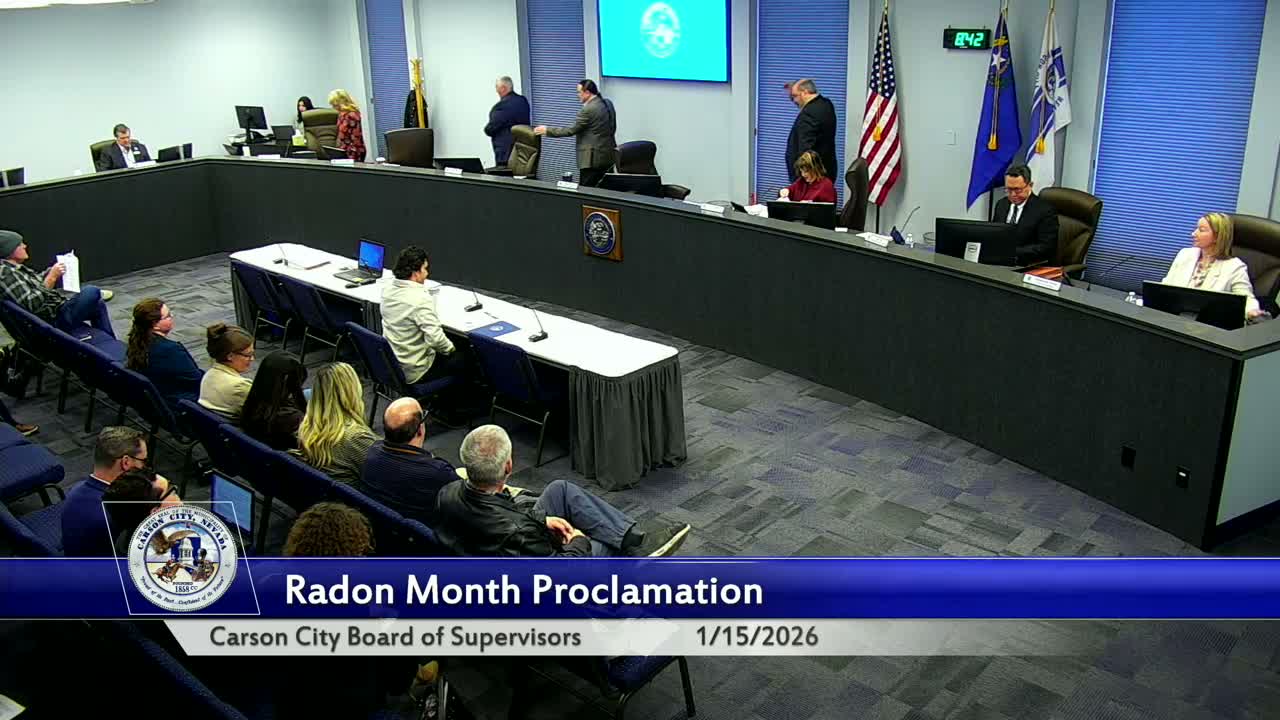
The Carson City Board of Supervisors on Monday proclaimed January 2026 as National Radon Action Month and received an annual report from the University of Nevada, Reno Cooperative Extension that emphasized local outreach and free testing.
Adam Carpenter, an Extension representative, told the board the office is offering free radon test kits through January and February and invited residents to pick them up at 727 Fairview, Suite F. "We are offering free radon test kits through January and February," Carpenter said, adding that the Extension can help homeowners interpret results and plan mitigation where sustained elevated levels are found.
The Extension's annual report for fiscal year 2024–25 covered July 1, 2024–June 30, 2025. Carpenter said the Master Gardener program held nine talks with almost 90 attendees and increased plant‑sale targets from roughly 750 to 800; 4‑H reached nearly 2,000 youth across Carson and Story counties with about 160 members in nine active clubs; and the Living With Fire program engaged 33 Carson City High School students through an art contest.
Carpenter said the radon program distributed more than 5,500 short‑ and long‑term radon test kits last year, with more than 3,500 of the kits returned for analysis. He noted that test results fluctuate during the day and that the Extension will consult with residents about when sustained high levels may require mitigation. He also warned that the SNAP‑Ed federal program supporting nutrition education will end May 31 because of federal funding cuts and said the Extension is exploring local partnerships to continue that work.
Why it matters: Radon is a colorless, odorless gas and a recognized lung‑cancer risk; local distribution of free test kits lowers the barrier for residents to learn their indoor air levels and pursue mitigation if needed. The board encouraged residents to use the free kits and to contact the Extension for follow‑up.