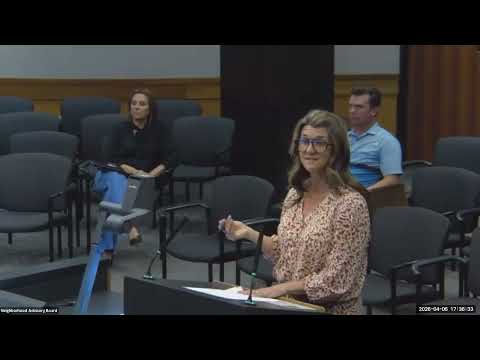
Local advocate recounts decade of homelessness and urges diversified local responses
Loading...
Summary
Grant Denton, a presenter who said he spent 10 years homeless and later worked in local service programs, urged a diversified approach to homelessness—triage, treatment, housing and workforce supports—while board members discussed river encampments, outreach programs and a council item proposing mobile cameras.
At the Ward 6 Neighborhood Advisory Board meeting on April 6, Grant Denton — who described spending about 10 years homeless and later working in shelter, outreach and recovery programs — gave a wide‑ranging presentation on the causes of homelessness and local policy responses.
"I spent about 10 years homeless myself, addicted on the streets, and then for the last 10 years have been working in this field," Denton said, framing his talk with historical context and policy analysis. He walked the board through shifts in U.S. policy, distinctions between situational and behavioral homelessness, and argued for a triage of services tailored to needs: skills training, documentation and reentry supports, and, when necessary, treatment.
Denton highlighted that many shelter clients are seniors and that situational homelessness (eviction, job loss) differs from chronic homelessness tied to addiction or severe mental illness. He described local programs such as outreach teams, river cleanup workforce efforts and the use of HMIS (Homeless Management Information System) to track individuals and connect them to services.
Board members and other attendees raised operational and policy points. The chair noted a council agenda item (b18) proposing $60,000 in grant money for mobile camera surveillance and targeted ranger response along the Truckee River; Denton and others discussed environmental and safety risks tied to river encampments and offered workforce‑oriented cleanup and outreach as part of a response.
Several board members encouraged Denton to share empirical sources and citations to strengthen policymaking; Denton offered to provide historical data and invited board members and staff to tour shelters and participate in outreach. The board and staff said they would share contact information and consider next steps including council engagement on related agenda items.
No board policy or motion was adopted; the session served as a community presentation and information exchange.