Neighbors press safety and noise questions as TragoGrid battery storage seeks annexation
Loading...
Summary
Developers presented a proposal for a TragoGrid battery energy storage facility near Taos Valley, emphasizing grid-stabilization benefits while residents and board members pressed for details about fire response, monitoring, and noise; the conditional use permit was approved by the planning commission and annexation is pending city council review.
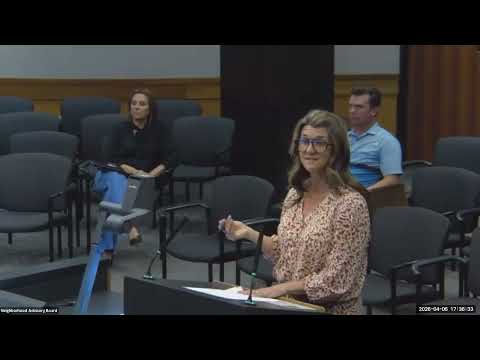
A developer seeking to annex property for a battery energy storage system told the Ward 6 Neighborhood Advisory Board on April 6 that the project would improve grid stability in South Reno but residents pressed for more detail on safety and local impacts.
Eric Casey, the applicant’s representative, described a project tied to LDC2600033 that would put battery arrays on part of a 53.49‑acre parcel adjacent to an NV Energy substation. "We are proposing the Tesla Megapack 2," Casey said, adding that the units are air‑cooled, self‑contained and monitored 24/7 and that sensors would automatically shut down charging or discharging if temperatures reached unsafe levels.
The city planning commission already approved a conditional use permit covering roughly 25.5 acres of the site; Casey said annexation is tentatively scheduled to go before the City Council on April 22. He described safety measures the applicant plans to provide: temporary fencing during construction, a permanent eight‑foot chain‑link fence with barbed wire, security cameras, an internal fire‑access road, seven on‑site hydrants intended for wildfire suppression, and third‑party training for fire responders.
Board members and residents focused on firefighting and noise. One board member summarized a frequent concern: "We can't fight lithium‑ion fires with water," and asked how the fire department would respond. Casey said the City of Reno’s fire review had taken place and that the site falls within an approximate six‑minute response time for the nearest station; he added that monitored sensors would alert responders instantaneously.
The applicant also presented a noise study. Casey said the study modeled a worst‑case scenario and found daytime sound levels near residences of about 50–55 decibels (city threshold cited at 65 dB) and nighttime levels around 35–40 dB (threshold cited at 49 dB), and that additional landscaping and stair‑stepped walls would provide visual and sound mitigation.
Board members asked about community benefit. "The short answer is grid stability," Casey said, arguing the facility would reduce risk of brownouts as regional demand grows. Several board members encouraged more detailed, technical documentation on monitoring and firefighting procedures to share with neighbors.
No council vote occurred at the Ward 6 meeting. The record provided at the presentation notes the CUP has planning commission approval and that the annexation requires a council hearing. Residents who remain concerned were directed to contact planning staff or the city clerk to submit comments prior to council consideration.
Next steps: the applicant indicated annexation was scheduled for April 22 at city council; the board received the presentation and public comments and did not take formal action.