Get Full Government Meeting Transcripts, Videos, & Alerts Forever!
Get email alerts on the Rno Reform topic
No spam. Unsubscribe anytime.
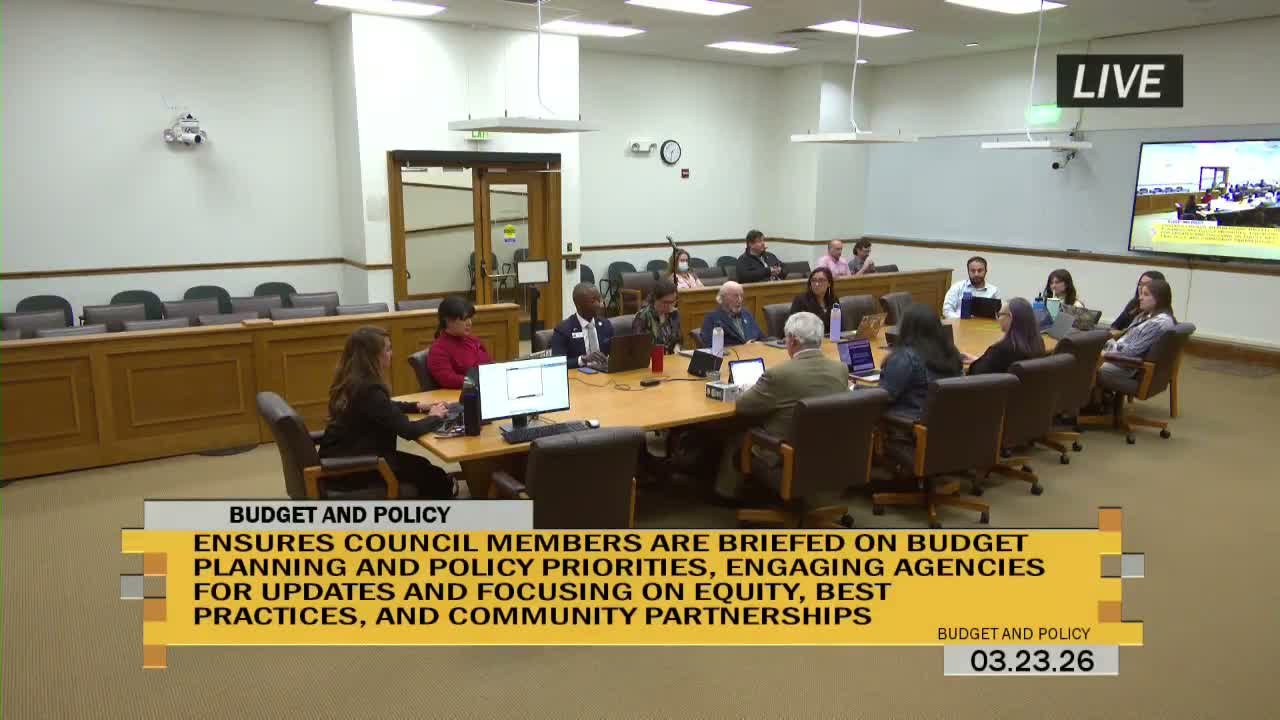
Denver aides outline community‑designed overhaul of Registered Neighborhood Organization rules
Summary
City aides presented a yearlong community engagement report recommending renaming and repositioning Registered Neighborhood Organizations, creating a Division of Community Empowerment, centralizing outreach and information, offering training and stipends, and establishing mediation and incentive‑based accountability.
City council aides presented a community‑informed plan to modernize Denver’s Registered Neighborhood Organization (RNO) ordinance, saying the review drew on a year of outreach and a report published earlier this week.
The presentation, led by council aides and staff, summarized survey work, focus groups, and interviews with city departments. “Policy co‑design enables community knowledge to actively inform policy development,” said Masha Lior, senior council aide for Councilman Cashman. Staff reported translated outreach materials in Denver’s top five languages, more than 40 in‑person events and roughly 140 participants at four neighborhood workshops.
Why it matters: Presenters said the existing RNO system is valuable but outdated and often conflated with homeowners associations and other neighborhood groups. The report identifies 24 themes from outreach and recommends changes aimed at increasing clarity, representation, accessibility and trust.
Key proposals include repositioning and renaming RNOs under a newly proposed Division of Community Empowerment housed in Human Rights and Community Partnerships (HRCP); creating a capacity‑based recognition framework that reflects different organization goals and resources; standardizing baseline election and governance expectations; and building a centralized city portal of RNO information so residents can find neighborhood contacts and notices.
Presenters also recommended practical supports to reduce volunteer burden: onboarding templates, training, a centralized grant program that could include stipends, funding for translation and hybrid engagement options, and a team within the Division of Community Empowerment to support RNOs. “We want RNOs to remain community driven, but be better connected, supportive, and more inclusive,” staff member said.
Councilmembers raised implementation questions during discussion. One member cited neighborhood boundary confusion and urged sensitivity to local identities when reducing overlapping RNO boundaries. Another urged prioritizing event‑permitting and special‑events rules to make small neighborhood gatherings feasible, saying onerous rules have reduced volunteer‑run events.
On accountability, staff proposed an incentive‑based grievance and mediation process and city‑supported conflict resolution instead of punitive enforcement. The report’s appendix contains full outreach data and detailed recommendations.
Next steps: Staff said they will hold four in‑person feedback sessions across the city plus virtual options, continue briefings to council offices, and aim to bring an ordinance through the council process in late spring or early summer.