Get Full Government Meeting Transcripts, Videos, & Alerts Forever!
Get email alerts on the Municipal Sentencing Reform topic
No spam. Unsubscribe anytime.
Residents tell Denver council to back municipal resentencing reform and avoid 300-day penalties
Summary
Several speakers, including youth advocates, urged the council to support a municipal resentencing reform bill, arguing 300-day maximum sentences for low-level offenses would harm unhoused youth and immigrant communities and that state law limits shorter detention.
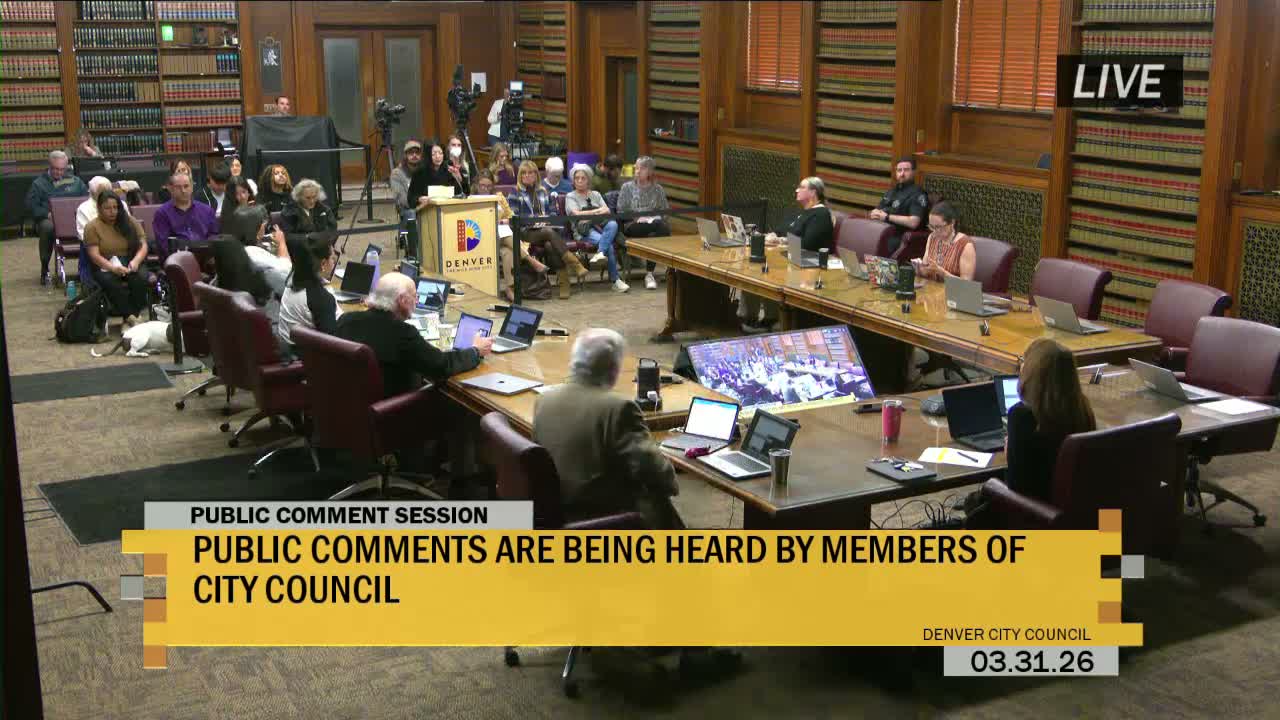
Multiple public commenters urged the Denver City Council to support a Municipal Resentencing Reform bill that would limit lengthy penalties for low-level offenses. "A maximum sentencing of 300 days for minor offenses would not allow healing in the community," Journey Ornelas said, arguing long jail terms would traumatize youth and worsen homelessness.
Zara Gallegos said extreme maximum sentences criminalize people living in poverty and cited a statewide homelessness estimate, saying "there are around 18,000 homeless people in the state of Colorado and around 1 fourth of that population is youth." Leila Vio Pondo urged shorter sentences and greater access to mental-health care, addiction support and housing services outside jail: "Jail should not be the place where someone receives their first chance of support."
Javier Cabra tied the local proposal to state law, asserting that state law "clearly says those who commit low level offenses shall not be held for more than 10 days in jail," and framed the municipal bill as a chance to align city practice with state standards. Commenters also warned of collateral consequences for immigrants, including DACA holders, if low-level prosecutions carry long jail terms.
The public comment period does not allow council members to debate or respond during the session. Speakers asked council members to consider community-based services as alternatives to incarceration.