Get Full Government Meeting Transcripts, Videos, & Alerts Forever!
Get email alerts on the Surveillance Contracts topic
No spam. Unsubscribe anytime.
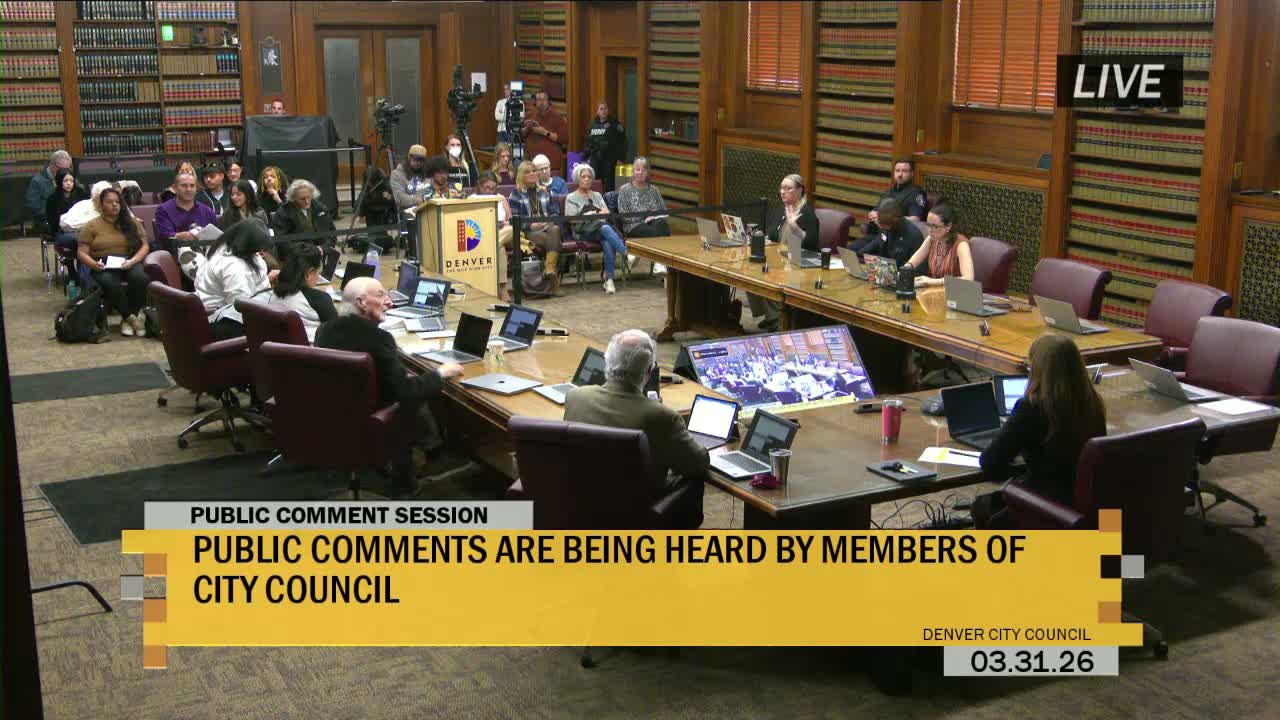
Public commenters urge Denver City Council to reject Axon contract over immigration-surveillance concerns
Summary
Community members told the council the proposed Axon contract risks immigrant surveillance and long-term municipal dependence on camera infrastructure; speakers cited Axon documentation and past federal contracts and urged a 'no' vote ahead of the council's scheduled decision.
Miriam Ordoñez, speaking for the American Friends Service Committee, urged the Denver City Council to vote no on the proposed contract with Axon, saying the company’s license-plate-reader guidance includes an "immigration violator" category that could enable immigration enforcement. "This indicates that the company systems can be used for immigration surveillance," Ordoñez said, and she told council members the systems "hurt our undocumented community."
Eric Gross expanded the argument, saying not only are cameras police tools but they function as long-term municipal infrastructure that can be repurposed. "When you have the capability to do a thing, more people want to do that thing," Gross said, likening expanding surveillance networks to adding lanes to highways and warning of "exponential growth" of data- and energy-intensive systems. He also referenced recent city moves to integrate AI into permitting and other systems as a step that could deepen municipal dependence on data infrastructure.
Supporters of rejecting the contract pointed to Axios-related federal work as evidence of the company’s ties to immigration and homeland-security uses: Ordoñez told the council that Axon has taken federal contracts and said the company's systems "have been used in immigration enforcement and deportation operations." She also urged members to consider whether the city can keep residents' travel and location data private if federal agencies gain access.
The comments combined technical and civil-rights concerns: speakers warned that automated license-plate readers and camera networks can be cross-referenced with other databases to enable immigration enforcement and predictive policing. "The only way that this data can be safe is to not collect it," Ordoñez said. Gross argued the city should consider the long-term costs and governance of infrastructure sized to last decades rather than the short-term benefits of increased surveillance.
The public comment period does not allow council members to respond; speakers said they expected the council to consider their concerns before the scheduled vote on the contract.