Get Full Government Meeting Transcripts, Videos, & Alerts Forever!
Get email alerts on the School Capacity And Bonds topic
No spam. Unsubscribe anytime.
Wayne Township board weighs rerunning failed bond as housing boom strains schools
Summary
Board members debated whether to repackage a failed bond referendum or pursue smaller, visible projects and short-term fixes — citing nearly full elementary schools and roughly 2,900 nearby housing units under development — while staff pursues leased space and temporary classrooms.
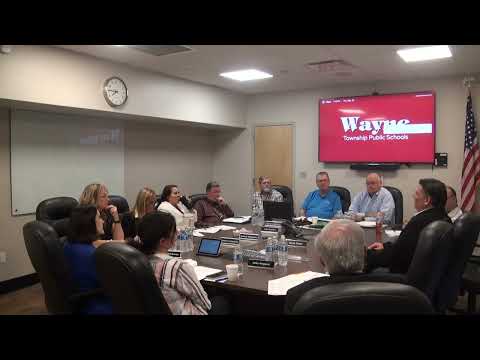
The Wayne Township Public School District Board of Education debated Tuesday whether to restart a bond referendum that failed earlier this year, as board members pressed for a clearer plan to address rising enrollment tied to nearby housing development.
The meeting opened with the superintendent noting the district’s elementary schools are at or near capacity and that the prior referendum, which would have funded maintenance and limited projects, failed by a wide margin. "We were at or near our maximum enrollment at almost all of our elementary schools," the agency official said, framing the discussion about how to respond to projected growth.
Board members split over strategy. One board member argued the earlier proposal emphasized maintenance projects and would not add meaningful classroom capacity: "There is minimal benefit for the long term in terms of adding some of space to support the growth that we anticipate," the board member said. Another board member urged piecemeal, visible projects or a smaller referendum sized to win public support.
Several members cited new housing as a key driver. "2,900 something," one board member said when referring to units planned nearby; another speaker confirmed the figure as "2,900," a number board members said would translate into material enrollment pressure if even a small share of units house school-age children.
Board members discussed alternatives to a large bond: phasing projects across elections, prioritizing projects that voters can readily understand (locker rooms, targeted boiler replacements), leasing or repurposing existing commercial or institutional buildings, and short-term redistricting. "If you come and say, ‘we’re going to do $50 million,’ tell me what that gets me in terms of class-size reductions," one member said, urging specificity on how any dollar figure would translate to seats.
The board did not vote to place a new referendum on the ballot. Staff was directed to develop several paths forward: pursue RFP responses to lease interim space, continue architectural work on temporary classroom units, and assemble enrollment projections and project cost breakdowns for a September retreat that members asked be scheduled to finalize recommendations.
The meeting closed with board members urging robust public engagement — including the possibility of town-hall-style meetings — to present any future plan more clearly to voters.
Next steps: staff will return with RFP responses, order-of-magnitude cost estimates for temporary classroom units and updated enrollment data at the September retreat.