Get Full Government Meeting Transcripts, Videos, & Alerts Forever!
Get email alerts on the School Capacity topic
No spam. Unsubscribe anytime.
Parents press Wayne board over elementary overcrowding; administration outlines interim fixes
Summary
At a June 13 meeting residents pressed the board about large elementary classes—including reports of a third-grade class with 27 students at Lafayette—prompting Superintendent Dr. Toback to describe short-term steps (Preakness investments, leased space, redistricting study, portable classrooms) and a staffing/hiring approach for summer.
Residents at the Wayne Board of Education meeting on June 13 urged the district to address elementary overcrowding and class-size pressure, citing specific examples at Lafayette Elementary School.
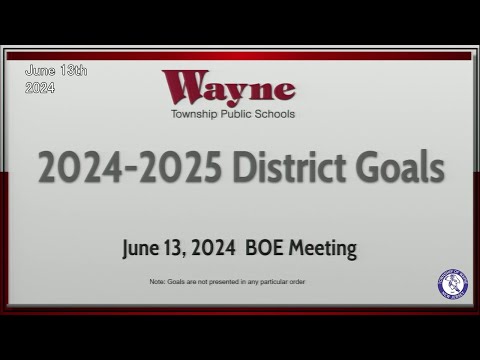
Karen Murphy told the board that her third-grade son’s class has 27 students and said she expected a third section would be added for next year but that it was not scheduled unless additional enrollments occur before September. "My third grader currently has 27 students in his class," Murphy said during public comment, describing concern about students who had reduced in-person instruction during the pandemic. Another commenter, Suzanne Puttap, said there is no explicit district goal addressing elementary overcrowding in the draft goals presented that evening.
Superintendent Dr. Toback responded with a series of interim steps the administration is pursuing if the referendum does not pass: continuing targeted investments at Preakness School to create classroom capacity; researching the rental of two community facilities (walk-throughs scheduled); pursuing a redistricting study (RFPs returned and work to begin this summer, with public reporting likely next year); and seeking lease prices for portable classroom units while noting the additional electrical, plumbing and site costs they require.
"We're also looking at offering parents options," Dr. Toback said, describing limited transfer options to other schools and the practical constraints of seating and staffing. He added that the business office will track enrollment closely through August and that the superintendent has authority (with the consent of the personnel chair and board president) to hire between meetings so vacancies can be filled before the school year begins.
Board members noted the long-term tradeoffs in district planning after the referendum failed. Several members urged creative thinking about consolidating buildings or reconfiguring facilities to reduce long-term costs, while acknowledging budget constraints.
Next steps the board identified include sharing the redistricting study results with the public next year, continuing summer tracking of enrollment and staffing, and reporting back to the board on leased-space options and cost estimates for portable classrooms.