House passes bill restricting face coverings for law enforcement and requiring visible identification
Loading...
Summary
The Maryland House of Delegates passed Senate Bill 1 after an extended floor debate over limits on face coverings and whether the state can direct federal officers; the bill requires officers to display agency and name/badge information and creates a state-adjudication mechanism for violations (vote: 100-37).
The Maryland House of Delegates passed Senate Bill 1 on a third-reading vote after an extended debate over whether the state can require law enforcement officers to keep their faces uncovered and display identification.
The bill requires law enforcement officers operating in Maryland to have visible identification showing agency affiliation and badge number and constrains the use of face coverings except in narrowly defined circumstances such as medical need, tactical operations or religious accommodations. The chamber declared the bill passed, with 100 votes in favor and 37 opposed.
Supporters said the measure aims to make officers identifiable during routine interactions and to reduce impersonation by bad actors. The floor leader (S19) told colleagues the bill's intent is to "ensure law enforcement is identifiable," and he said the Maryland Police Training and Standards Commission would develop a uniform policy that agencies would follow.
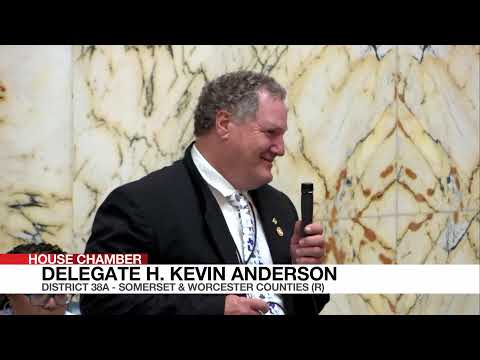
Opponents warned the measure raises constitutional questions and could put the state into conflict with federal authorities. The minority leader (S24) said the provision "almost certainly violates the supremacy clause" and pointed to recent litigation in other states that has temporarily enjoined similar measures. A delegate from Southern Maryland (S6) argued the bill focuses on "unmasking and intimidating ICE" and warned of unintended consequences for officers and communities.
Lawmakers pressed sponsors about operational details: whether tactical or undercover officers would be exempt, how weather or safety-related protective gear would be treated, and how uniformity would be enforced across the many local, state and federal agencies that operate in Maryland. Sponsors replied that the bill contains enumerated exceptions and directs the Police Training and Standards Commission to draft the implementation policy; citations for alleged violations would be adjudicated in district court.
Several members noted concerns raised by law-enforcement groups. The floor leader said the amended bill incorporated feedback from the Maryland Chiefs and Sheriffs Association but acknowledged the group did not endorse the final version outright.
A number of members framed the vote in terms of community safety and accountability. "When an officer interacts with the public, we should be able to know who is doing that job," said a delegate who spoke in favor (S30). On the other hand, critics cautioned the bill could lead to litigation and divert resources if it is challenged in court.
The House recorded 100 affirmative votes and 37 negative votes; the clerk declared Senate Bill 1 passed. The bill's next procedural step (sending the enrolled bill to the governor) was not recorded in the floor transcript. The chamber proceeded to other business and short committee votes before adjourning for a scheduled recess.