Get Full Government Meeting Transcripts, Videos, & Alerts Forever!
Get email alerts on the Comprehensive Plan topic
No spam. Unsubscribe anytime.
Residents press council to protect descendants and limit density as debate over Corrales comprehensive plan intensifies
Summary
Public commenters urged the council to explicitly protect descendant families and preserve rural character; the council and plan committee debated creating a planning department, transfer‑of‑development‑rights (TDR) language, lot‑coverage limits and tools for senior housing ahead of a May 13 public hearing and potential adoption.
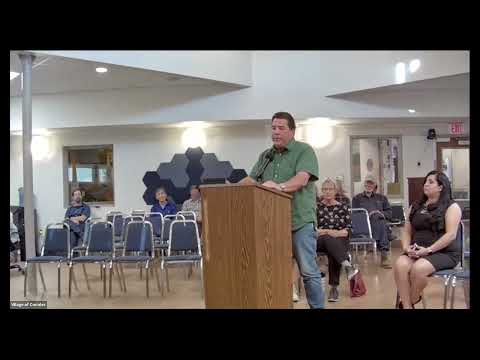
Residents filled the Corrales forum with appeals to preserve the village’s rural character and to protect longtime descendant families as the governing body prepares to consider a new 10‑year comprehensive plan.
Ricardo Blanco and other public commenters urged the council to include explicit language and "guardrails" in the plan that recognize and address the needs of descendant families, recommending cultural impact studies and a dedicated section in the plan for descendants’ concerns. Several commenters — including Ken Martinez, Fred Hashimoto and Salome Ward — warned that certain planning tools could increase density and strain limited water resources.
A central point of debate at the council table and in testimony from the Comprehensive Plan Review Committee (CPRC) and Planning & Zoning (P&Z) was a set of edits over whether to create a Department of Community Planning and Project Management. The CPRC asked the council to restore language creating a professional planning office, saying complex implementation and grant management require dedicated staff. Planning & Zoning and the village attorney proposed a substitute phrasing to create a system of community planning rather than a department; staff told the council the attorney had suggested that change for legal and administrative reasons.
Councilors and committee members also debated transfer‑of‑development‑rights (TDRs). Some councilors said TDRs are likely to increase density and would conflict with existing one‑acre lot expectations; CPRC and others said TDRs can be one tool to permit needed senior‑housing density in exchange for preserved open space if strict receiving‑zone and procedural guardrails are required. Another contested technical proposal would flip lot‑coverage language with the stated aim of preserving 50% of lots as open space by limiting impervious coverage to 25% and tightening setbacks.
Councilors repeatedly emphasized that the comprehensive plan is an advisory guiding document — not an ordinance — and that any implementing ordinances (zoning, TDR program, or senior‑housing code) would require later council action, public hearings and, where required, enabling ordinances. Several council members asked for additional study and public comment; staff indicated the plan is tentatively scheduled for final consideration at the May 13 meeting, which will include a public hearing and related hearings on municipal lot size and farmland preservation items.
The council asked planning staff to provide comparisons, spell out implementation implications of TDRs and cluster‑housing tools, and identify deadlines tied to previously awarded capital funds. No final vote on the comprehensive plan was taken at this meeting.