Lifetime Citizen Portal Access — AI Briefings, Alerts & Unlimited Follows
Seminole County breaks ground on Rolling Hills Park and roadway improvements
Loading...
Summary
Seminole County officials and residents marked the start of construction for phase 1 of the Rolling Hills Park and Roadway Improvement Project, funded in part by the county penny sales tax and an MSBU; county leaders described roadway reconstruction, pedestrian upgrades and park amenities including a 4-mile trail loop and fishing pier.
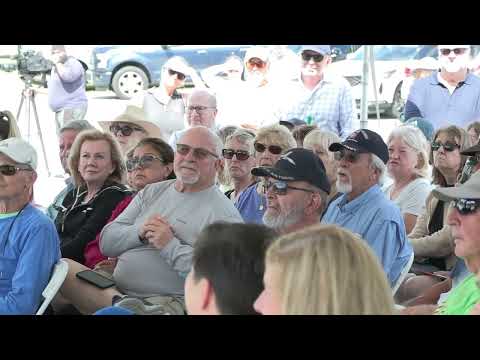
Seminole County officials and Rolling Hills residents gathered Thursday for the groundbreaking of phase 1 of the Rolling Hills Park and Roadway Improvement Project, county Manager Darren Gray said at the ceremony.
The project will reconstruct North Street between Palm Springs and Raymond in three segments to reduce traffic disruption, add sidewalks and pedestrian improvements at intersections, install a roundabout to slow traffic, and build park amenities including a 4-mile trail loop, benches, mile markers, signage, tree plantings and a fishing pier on Lake Jeanette, Rick Richter, the county director of parks and recreation, said.
The work “will be constructed in segments, 3 of them, 1 at a time,” Richter said, adding the phased approach is intended “to minimize the amount of traffic issues” and reduce dust and noise during construction. He said the county has contracted designers and engineers — naming GAI Community Solutions for parks design and HDR for roadway engineering — and that a local Seminole County contractor, Collage, will perform the work.
County leaders framed the project as the culmination of years of neighborhood organizing and county coordination. “This project is the result of the penny sales tax,” Board Chair Andrea Herr said, thanking the residents who voted for the tax and noting that the community also supported the project through an MSBU. She credited long-term local organizing for keeping the land as parkland and preventing incompatible development.
Commissioner Lee Constantine said the neighborhood’s stewardship has yielded financial as well as recreational benefits: “Do you know that in 2016 the cumulative value of Rolling Hills was $185,000,000? You know what it is today? ... 388,000,000,” he said, adding that preserving and conserving land “is an investment, not a cost.” Those figures were stated by Constantine at the ceremony and were presented as examples of the project’s local economic impact.
Vice Chair Amy Lockhart recalled the site’s history as a former golf course that had fallen into disrepair and described coordination with state regulators and MSBU-funded soil remediation that preceded construction work. Richter said the county will add interpretive signs and location markers along the trail and plant trees to begin restoring the tree canopy lost while the county owned the property.
Organizers emphasized minimizing disruption during construction. Richter said crews will sequence work so that not all segments are active at once and that pedestrian connections between the neighborhood and the new trail will be prioritized.
After the presentations, county officials invited residents to join the ceremonial groundbreaking. Chair Andrea Herr led a count to begin the ceremony and attendees proceeded to the site for the first shovels.
Construction is expected to proceed in phases; county officials at the ceremony described sequencing and contractor partnerships but did not provide specific construction timelines or completion dates.