Get Full Government Meeting Transcripts, Videos, & Alerts Forever!
Get email alerts on the School Budget topic
No spam. Unsubscribe anytime.
Smithfield officials say proposed FY27 school budget risks depleting reserves and trimming programs
Summary
At a joint April 8 meeting, school and town officials warned the FY27 school budget could erode fund balance and force cuts to programs and services, citing rising health-care and transportation costs, state-mandate obligations and uncertain reimbursements.
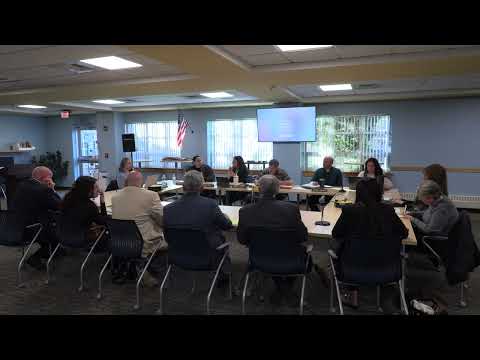
Smithfield’s school committee and town council on April 8 warned that the proposed fiscal 2027 school budget could drain reserves and require cuts to programs that serve students, as officials pointed to rising health-care and transportation costs, state-mandated curriculum requirements and uncertainty about state reimbursements.
The warning came as presenters reviewed a Stage 2 capital request and related town contributions. Presenter (S7) said the district’s capital list includes multiple projects — including bathroom renovations and building-envelope work — and that the town manager’s current recommendation of $200,000 toward an approximately $1.3 million town-side request would fall short of earlier assumptions the school team used when pursuing state funding. “If the town manager’s budget went forward, how could, what would happen to our client stage 2?” a committee member (S4) asked; S7 replied that missing the district’s annual target could “potentially jeopardize any of our funding that we would then be able to recruit and not, redeem it and reimbursement of the state.”
Why it matters: officials said the district has limited margin to absorb higher costs. Chair (S1) warned that using reserves to cover operating costs would leave the district exposed: “If we take a hit of 500,000 on, we’re gonna be left with a fund balance that is dangerous,” the Chair said. Members also noted recent increases in health-insurance premiums and a contested contractual extension on busing costs. Presenter (S7) told the meeting that the district has withdrawn its approval of a costly extension and posted a transportation RFP that day to solicit competitive bids from multiple vendors, seeking cost savings from coordinated purchasing with neighboring districts.
School staffing, mandates and recurring costs were central to the budget discussion. Committee members and the presenter reviewed new and ongoing state expectations — for example, curriculum and graduation requirements that can add course sections or teachers — and asked that the budget materials clearly flag which line items are mandated versus discretionary. Presenter (S7) recommended color-coding or asterisking mandated items to help the council identify realistic options for savings.
On personnel spending, Committee member (S11) flagged substitute-teacher costs as an example of a line item that is hard to cut without risking operational shortfalls. S11 laid out historical substitute spending and said reductions already made are likely to be insufficient, noting that substitute costs have historically been roughly $600,000 and that the current line-item change may understate likely final spending.
Public concern and community impact: during public comment, Anne Howard Lang (S10), a parent of three district students (two with special-education needs), urged the board to weigh day-to-day impacts of cuts to paraprofessionals, intervention staff and athletics. “My son was receiving math support…he just was removed because of budget cuts,” she said, asking how the budget would affect students who need constant supports.
Next steps: members tentatively scheduled a joint workshop with the budget review board for May 27 at 6:00 p.m. in Town Hall Chambers and noted a public hearing on the budget is scheduled for April 30. Officials said they will continue gathering and uploading data to the shared folder, including residential-growth address data the town planner can provide to help reconcile developer projections with actual occupancy and student counts.