Get Full Government Meeting Transcripts, Videos, & Alerts Forever!
Get email alerts on the Land Use topic
No spam. Unsubscribe anytime.
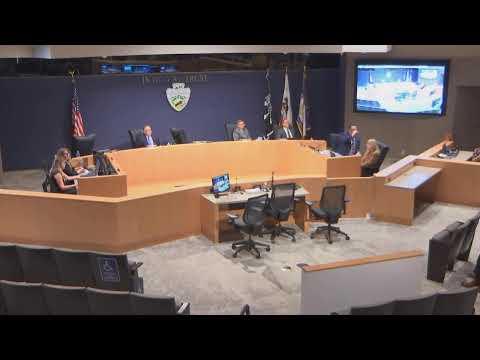
Board OKs One Tree Hill policy and zoning amendment despite sharp Joshua Tree opposition
Summary
The board approved a policy‑plan and zoning amendment for a 40‑acre "One Tree Hill" site in Joshua Tree that reassigns acreage between medium‑density residential and commercial uses; residents testified strongly against rezoning and warned of traffic, flooding and short‑term‑rental loopholes but staff said no development is proposed now and CEQA review found no significant impacts.
The San Bernardino County Board of Supervisors on March 24 voted to approve a policy plan amendment and zoning amendment for the One Tree Hill project, a proposed land‑use map change affecting about 40 acres at the northwest corner of 29 Palms Highway and Sunset Road in Joshua Tree.
Land Use Services Director Miguel Figueroa and Planning Chief Paul Gonzales told the board the action adjusts land‑use designations — reducing medium‑density residential from 33 to 24 acres and increasing commercial from 7 to 16 acres — and that the planning commission recommended approval following an initial study and negative declaration circulated under CEQA. Staff said the CEQA initial study found no significant environmental impacts and that no development plan is currently proposed; any future development would require subsequent planning applications and environmental review.
Residents at remote Joshua Tree conferencing sites and in chambers urged the board to protect the town’s character and raised multiple concerns: longtime residents said the change could facilitate resort‑style developments, increase traffic and pedestrian safety risks along Highway 62, worsen flood routing in downtown Joshua Tree, and exacerbate short‑term rental (STR) enforcement problems. Several commenters cited cases of existing properties operating as de facto commercial venues and urged stricter STR controls.
Figueroa and Gonzales responded that the current amendment only modifies map designations and does not authorize construction; Gonzales noted written comments received in the 24 hours before the hearing and said future projects would be subject to separate environmental and noticing requirements.
After public testimony, the board closed the public hearing, moved and seconded the item, and the motion passed unanimously.
Provenance: Staff presentation and public hearing (topic introduced SEG 660; public comment and vote documented through SEG 1042).