Get Full Government Meeting Transcripts, Videos, & Alerts Forever!
Get email alerts on the Education Accountability topic
No spam. Unsubscribe anytime.
District reports midyear LCAP progress: mixed academic gains, improved retention and attendance
Summary
Superintendent and district leaders presented a midyear Local Control and Accountability Plan update showing gains in early literacy (DIBELS), improved new‑hire retention, rising TK enrollment and higher attendance at several sites, while noting areas needing continued focus such as secondary inclusion and certain benchmark declines.
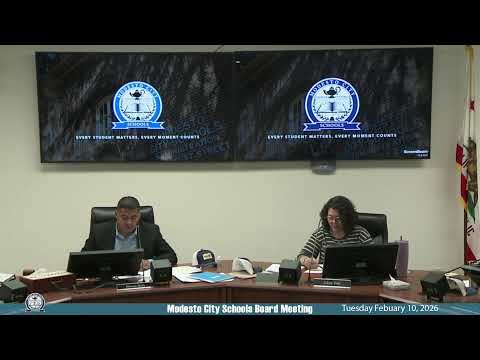
Modesto City Schools presented a midyear Local Control and Accountability Plan (LCAP) monitoring report to the board on Feb. 10 that linked instructional work to five district strategic goals. Superintendent Dr. Petrago and senior directors summarized action‑level progress across multiple networks.
Highlights presented by district staff included: new‑hire retention increased (reported midyear new‑hire retention at 97%), a 20% middle‑of‑year increase in TK DIBELS benchmarks in some student groups, and improved attendance district‑wide (up to 93.8% overall with notable increases at alternative and high‑school sites). Early childhood enrollment (TK and K) rose, and the Map Your Mission college‑and‑career readiness initiative showed near‑term gains in the California Dashboard college‑career indicator for some sites.
Presenters also flagged areas needing attention: some grade‑level CAST/CAASPP readiness indicators remain low relative to targets; grade‑specific benchmark variation (for example, a decline in some grade 3 math indicators) will drive targeted interventions; and secondary access for students with disabilities requires further work to raise the proportion spending most of the day in general education. District leaders said strategies include expanded instructional coaching, grading‑for‑equity professional development, targeted interventions, and the expansion of Map Your Mission pathways.
Trustees and student representatives asked detailed questions about benchmark comparability, the meaning of differing assessments (DIBELS vs. CAASPP), mentorship for new hires, restroom and facility improvements at Davis High (presented as a pilot for broader restroom upgrades), and follow‑up on suspension and EL‑specific trends. Staff said they will return with site‑level breakdowns where needed and continue to align supports through the end of the year.