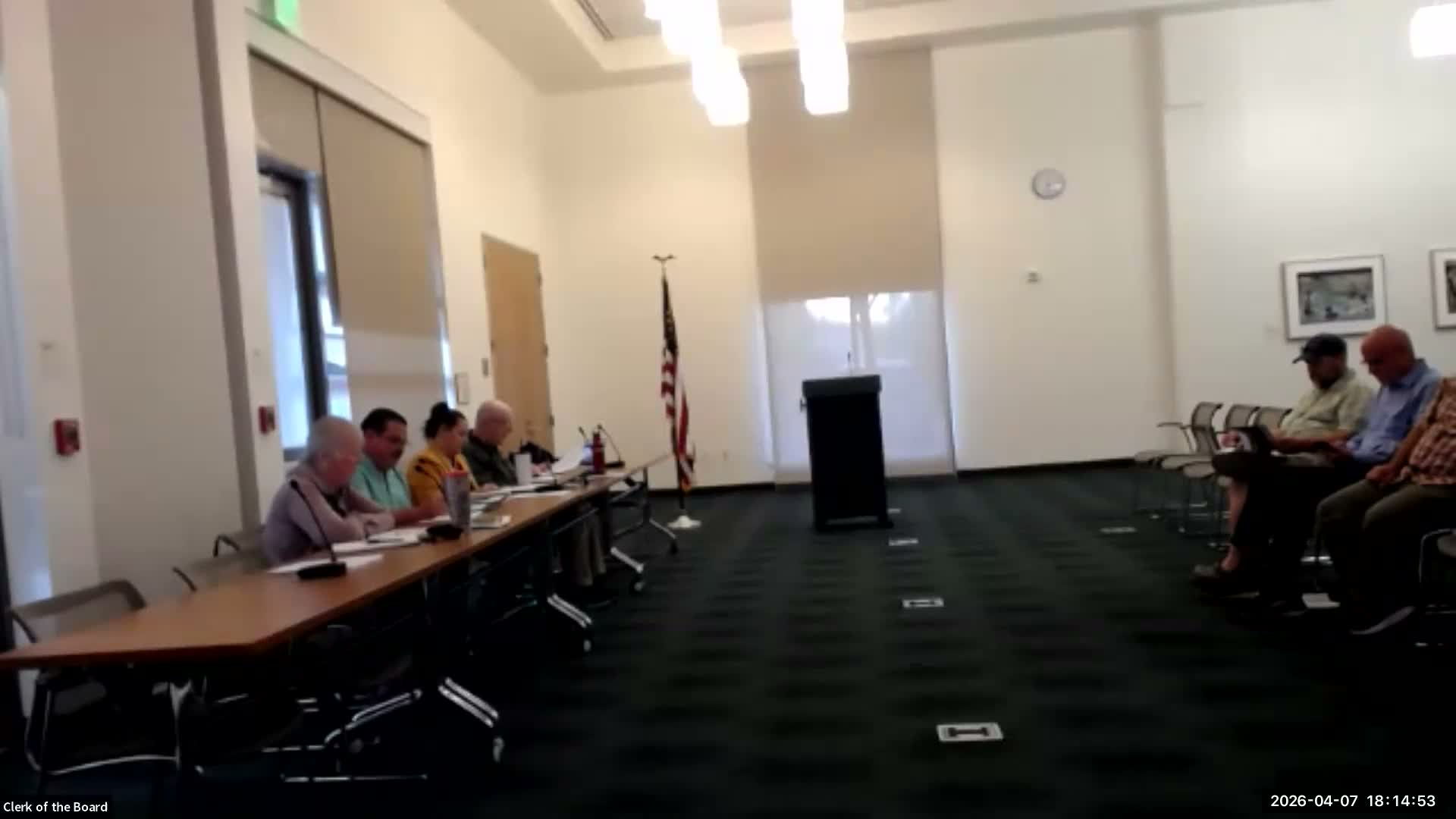
Alameda County sergeant briefs Fairview MAC on license-plate readers, drones and transparency portal
Loading...
Summary
Sergeant Culley of the Alameda County Sheriff's Office told the Fairview MAC that an integrated network of nearly 100 license-plate readers, pan-tilt-zoom cameras and a drone-first-responder program has reduced stolen-vehicle reports and sped responses; residents raised privacy and staffing questions. The board will revisit approval of the county's LPR program on April 20.
Sergeant Culley, supervisor of the Alameda County Sheriff's Office's real-time information center, told the Fairview Municipal Advisory Council on April 7 that the county's integrated crime-technology platform combines automated license-plate readers (LPRs), pan-tilt-zoom cameras and a drone-first-responder program to assist deputies and partner agencies.
Culley said the county has deployed nearly 100 LPR cameras across Alameda County and integrates HOA and business camera feeds into a single panel (Flock OS). "We have seen auto theft decrease by half," he said, and reported that stolen-vehicle reports in the unincorporated area dropped from more than 1,000 in 2022 to fewer than 200 a year after the system was deployed. He also described a drone program that can be launched to an emergency location within 30 to 60 seconds using PREPARE911 to tap live 911 calls; "just since January, we've apprehended, I believe, 77 people," Culley said.
Culley emphasized restrictions the department places on data use. "We do not share with the federal government," he said, and deputies must accept terms that prohibit using the system for immigration enforcement or for reproductive- or gender-affirming health-care enforcement. Culley added the sheriff's office publishes LPR and drone deployments in a transparency portal and that the office "owns the data" and controls sharing.
Residents and MAC members pressed the sheriff's office on several points. Mimi Dean asked how a center with a small staff could operate around the clock; Culley replied the real-time information center is not currently staffed 24/7 and runs roughly 10 hours on the busiest days. Community members also asked about flight restrictions near airports, locations of fixed cameras, whether LPRs could be used for speed enforcement (Culley said state law and technology differences prevent that), and how private business and residential cameras are shared (business camera sharing is voluntary; investigators may seek a warrant if evidence is needed).
Culley provided examples of criminal and public-safety uses: missing-person recoveries, human-trafficking investigations and structure-fire assessments. He described a voluntary registry for residential cameras and a separate mechanism for businesses to share selected live streams for real-time assistance to deputies. He also acknowledged instances of vandalism against cameras and said the sheriff's office has relocated or repaired equipment in response.
Why it matters: the Board of Supervisors will consider renewal/approval of the county's LPR agreement on April 20. Culley urged residents of the unincorporated area to attend or submit comment; he said much of the opposition at a recent board meeting came from people who do not live in the unincorporated area and that local voices matter in the decision. The MAC continued its agenda after the presentation; no formal action was taken by the MAC on the sheriff's program itself.
The sheriff's office declined to provide additional documents beyond those posted in the transparency portal during the meeting; residents were given contact information to follow up.