Get Full Government Meeting Transcripts, Videos, & Alerts Forever!
Get email alerts on the Public Art Ceqa topic
No spam. Unsubscribe anytime.
Supervisors uphold planning department's emergency CEQA exemption to remove Vaillancourt Fountain; board votes 10–1
Summary
After hours of testimony for and against preserving the Vaillancourt (Embarcadero) Fountain, the Board of Supervisors voted 10–1 to affirm the Planning Department's statutory emergency exemption and allow Recreation and Parks to disassemble and store the fountain pending further study; opponents argued the city manufactured an emergency and urged full CEQA review.
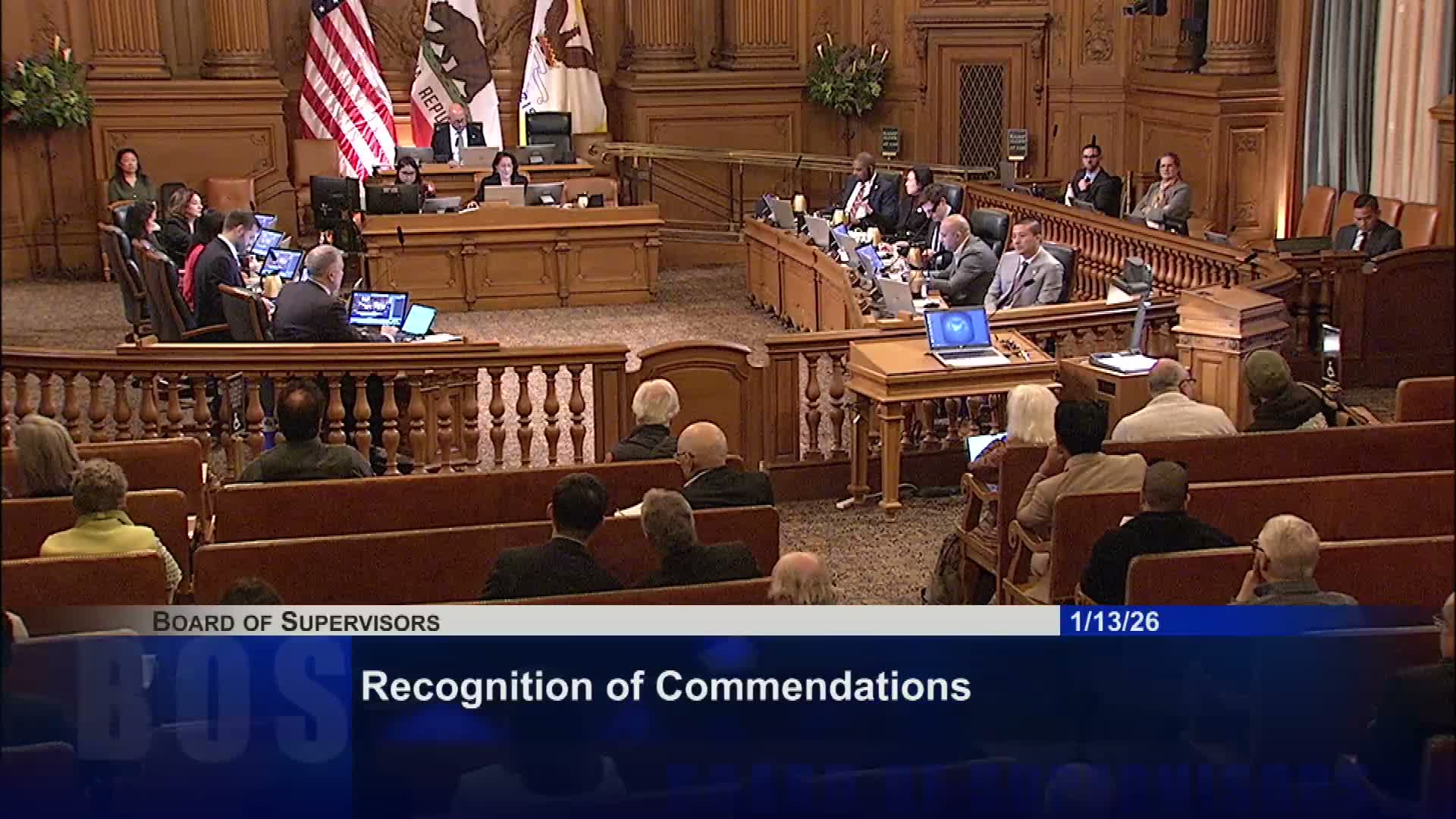
The San Francisco Board of Supervisors on Jan. 13 voted to affirm the Planning Department's issuance of a statutory emergency exemption under CEQA that allows the Recreation and Park Department to disassemble and move the Vaillancourt (Embarcadero) Fountain into storage while the city investigates its condition and options for repair or relocation.
Supervisor Sauter moved to uphold the Planning Department's determination (item 21); the motion passed by roll call with 10 ayes and 1 no (Supervisor Fielder opposed). The board simultaneously tabled related items 22 and 23 to allow for further consideration.
The vote followed a four‑hour public hearing that included appellants and preservation advocates who argued the city had not shown a sudden emergency and had effectively "pre‑committed" to removal as part of a larger plaza project without completing environmental review. Jack McCarthy and attorney Susan Brant Holly, representing DOCOMOMO NOCA and affiliated preservation stakeholders, urged the board to set aside the exemption and require CEQA review, arguing the fountain is an internationally known historic resource and that the city's record shows deferred maintenance rather than a new emergency.
Planning Department staff — senior planner Kei Zushi and environmental review officer Lisa Gibson — told the board the decision rested on substantial evidence in the record. Zushi cited condition assessment reports and letters from engineering and building‑safety reviewers (a DCI report dated 05/19/2025, a Department of Building Inspection letter dated 10/27/2025, and a Page & Turnbull report dated 06/02/2025) documenting structural deficiencies and hazardous materials. Gibson and planning staff argued the statute allows an exemption to prevent or mitigate an imminent safety emergency and does not require that an emergency already have occurred.
Recreation and Park Department project staff and Arts Commission representatives described the fountain as a 710‑ton concrete structure with roughly 10‑ton cantilevered arms and internal steel that has corroded after decades of exposure. Project manager Yohanna Harrison Goodwin told the board engineers found at least one 10‑ton arm bearing on an adjacent arm (a condition the engineers said was not consistent with original design) and identified missing reinforcing steel and at least one missing post‑tensioning rod, which engineers concluded reduced an affected arm's capacity by about 25 percent. City staff also reported repeated breaching of fencing and documented incidents of people entering and sleeping within the hollow elements of the fountain.
Staff said removal and off‑site analysis would begin after required artist notification and a 90‑day period; Rec and Park estimated disassembly and storage would take about two months and cost approximately $4,400,000, with storage for up to three years while the city considers restoration, relocation or other options. Planning staff said the emergency exemption does not preclude later restoration; Arts Commission staff earlier approved removal relying on the exemption.
Speakers on both sides filled the chamber. Preservation groups including San Francisco Heritage and DOCOMOMO, longtime artists, architects and residents urged keeping the fountain and pursuing CEQA review, calling for more public consideration of alternatives. Neighbors, the Gateway Tenants Association, business representatives and downtown stakeholders urged denial of the appeal, describing the structure as hazardous, an "attractive nuisance," and an impediment to planned plaza improvements. Several commenters said restoration would likely cost far more than removal; staff estimated full restoration at roughly $29,000,000.
Appellant counsel Susan Brant Holly argued that the city had effectively funded removal through the Embarcadero Plaza renovation project and that the exemption was therefore improper; she said the record did not show a sudden, unforeseen emergency that would allow bypassing CEQA. Appellants also suggested less‑intrusive abatement and enhanced security could reduce risk while environmental review proceeded.
Supervisor Sauter, moving to uphold the exemption, said the panel's role was narrowly to assess whether the record supported the Planning Department's determination that removal was necessary to prevent harm. "I do believe this fountain ... poses a significant public safety hazard," Sauter said, and recommended denying the appeal. The motion passed; item 21 was approved and items 22 and 23 were tabled for further consideration.
The board's action allows Recreation and Park to proceed with the emergency removal and storage plan while related procedural questions and design decisions remain unresolved. Because related items were tabled, additional hearings or findings may follow before any final disposition of the fountain.