Get Full Government Meeting Transcripts, Videos, & Alerts Forever!
Get email alerts on the Land Use And Development topic
No spam. Unsubscribe anytime.
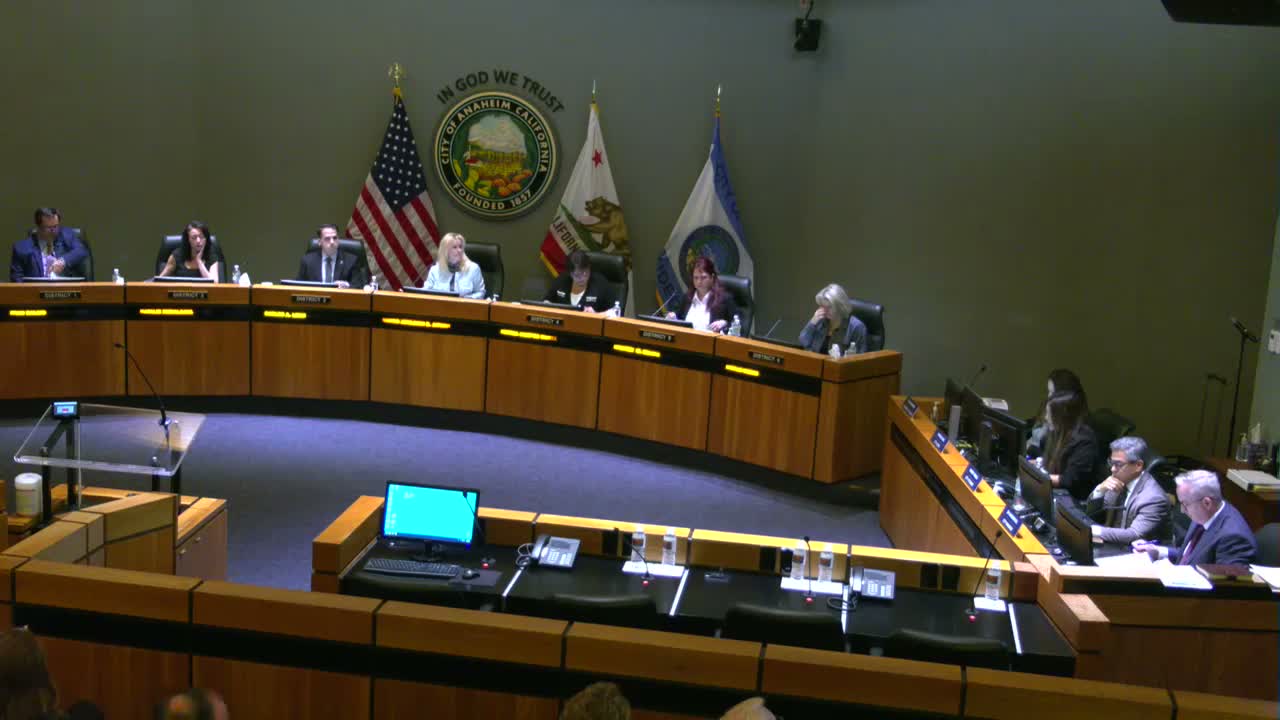
Anaheim council continues vote on Anaheim Hills Festival housing project after hours of public safety and labor concerns
Summary
After hours of public testimony focused on wildfire evacuation and construction labor standards, the Anaheim City Council continued a decision on Shea Properties’ proposal to convert the Festival Shopping Center theater site into 447 apartments to Feb. 3 for further negotiation and review.
The Anaheim City Council on Jan. 11 continued consideration of a proposed mixed‑use project at the Festival Shopping Center after residents, labor representatives and councilmembers raised concerns about wildfire evacuation, traffic and labor commitments.
Shea Properties’ proposal would demolish a vacant 1,880‑seat cinema and build a four‑story, 447‑unit apartment community wrapped around a six‑level parking structure, with 10 percent of units designated moderate‑income and a package of public benefits that staff said included $100,000 contributions to fire and police training, CCTV and emergency‑vehicle preemption at four intersections. Planning staff and the developer’s fire consultant said the project meets code requirements but that the final environmental impact report (EIR) identified a significant and unavoidable vehicle‑miles‑traveled (VMT) impact.
The hearing drew more than 60 in‑person speakers during the public comment portion. Opponents described past evacuations from Anaheim Hills and argued that the area’s narrow canyon roads and limited ingress/egress make dense housing unsafe. “This is not about being anti‑housing,” resident Joni Gaynor said. “This is truly about safety, lack of infrastructure to handle it, and whether this location can realistically protect the people that already live here.”
Speakers repeatedly cited the October 2017 Canyon‑area wildfire and other evacuations as evidence that evacuation times can stretch into hours. Dudek, the project fire‑protection consultant, reported that a modeled evening evacuation scenario ran about 2 hours 51 minutes under existing conditions, and that the project scenario increased modeled evacuation time to about 3 hours 5 minutes in the study’s assumptions. Dudek emphasized the modeling considered multiple scenarios and that staff and regional partners have developed a “Know Your Way” evacuation program since 2017.
Labor advocates also urged stronger commitments from the developer. Jimmy Rudin, representing the Carpenters’ union, said Shea declined to commit to skilled‑labor provisions on core scopes such as parking‑structure work and drywall. “When we collectively requested a commitment to use skilled and trained workforce … we were told the project would not pencil out,” he said.
Councilmembers pressed staff and the developer on mitigation, enforceable community benefits and whether the development agreement could include local‑hire or workforce provisions. City staff explained that some fee programs and incentives adopted after the project application was filed would not apply retroactively; the project team said it had negotiated memoranda of understanding (MOUs) with some trades but declined to accept mandatory union requirements the city could not lawfully impose on a private development.
Following lengthy questions about fire hardening, evacuation modeling, parking and construction labor standards, Councilmember Rubalcava moved to continue the item to Feb. 3 so staff, the developer and community representatives could refine the development agreement and report back on feasible, enforceable terms. The motion carried 7‑0.
Next steps: staff will return with a revised development‑agreement draft and recommendations at the Feb. 3 council meeting. If the council ultimately approves the project, the development agreement requires Shea to pull building permits by Oct. 1, 2029 to preserve certain project benefits; if permits are not pulled, the agreement’s benefits may lapse.