Get Full Government Meeting Transcripts, Videos, & Alerts Forever!
Get email alerts on the Bond Projects topic
No spam. Unsubscribe anytime.
Oakdale trustees approve priority Series A bond projects after detailed review of windows, soft costs and solar potential
Summary
Trustees approved architecture contracts and a prioritized list of Series A bond construction projects after staff and program managers outlined DSA-driven thresholds for window work, explained soft cost estimates and said solar on a junior-high shade structure will require further study.
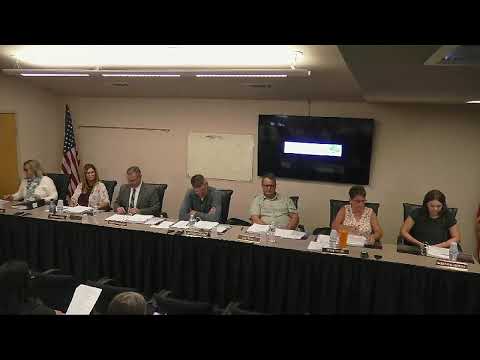
The Oakdale Joint Unified School District Board of Trustees on a motion approved architecture contracts and a prioritized list of Series A bond construction projects after an extended presentation on scope, regulatory thresholds and budget components.
Program management and consultants told the board that window replacement projects exceeding roughly $203,000 trigger Division of the State Architect (DSA) accessibility requirements that can cascade into bathroom, path-of-travel and parking upgrades. The program manager explained that “once the project exceeds about $203,000 it brings into play all of the accessibility issues,” and said the district plans to stage and combine some window work with other modernization projects to reduce unnecessary rebuilds.
Board members voted to approve Finney Architects as architect of record for the Magnolia multipurpose/cafeteria building and Pratt Architecture for the Oakdale Junior High School shade structure, and then approved the broader priority list directing program managers to retain architects and proceed to design.
Staff also walked the board through soft costs, which were presented as a sizable portion of the project budget. Program management said soft costs in the materials presented amount to about 30% of construction costs and include architecture fees (an estimated 6–10%), governmental fees (DSA and others), testing labs for hazardous materials, inspector-of-record expenses and district IT network upgrades. Staff emphasized that any soft-cost allocations not used would be recycled into subsequent projects.
Trustees discussed whether the junior-high shade structure could support solar panels. Program staff said solar is “worth looking into” but cautioned that re‑engineering to add the additional weight and ensuring an efficient south-facing orientation, as well as tree blockage, would require further study and potential redesign.
The board asked for flexibility in sequencing projects and was told that approval of the priority list provides direction to the program manager and does not itself authorize construction contracts; those would return for separate board approval. Following the motion and second, the board voted in favor of moving forward with the recommended priority list.
Next steps cited by staff include continuing design work, returning to the board for contract approvals and adjusting project sequencing if urgent repairs (for example, a catastrophic roof failure) require reallocation of funds.