Get Full Government Meeting Transcripts, Videos, & Alerts Forever!
Get email alerts on the Traffic Engineering topic
No spam. Unsubscribe anytime.
Fullerton traffic engineer outlines signal upgrades, CCTV policy and staffing limits
Summary
City traffic engineer Michael Plonnick told INRAC the department runs about 154 signalized intersections, is upgrading communications and cameras, and live‑streams intersection CCTV without retaining recordings; staffing is limited to two in‑house engineers plus on‑call consultants.
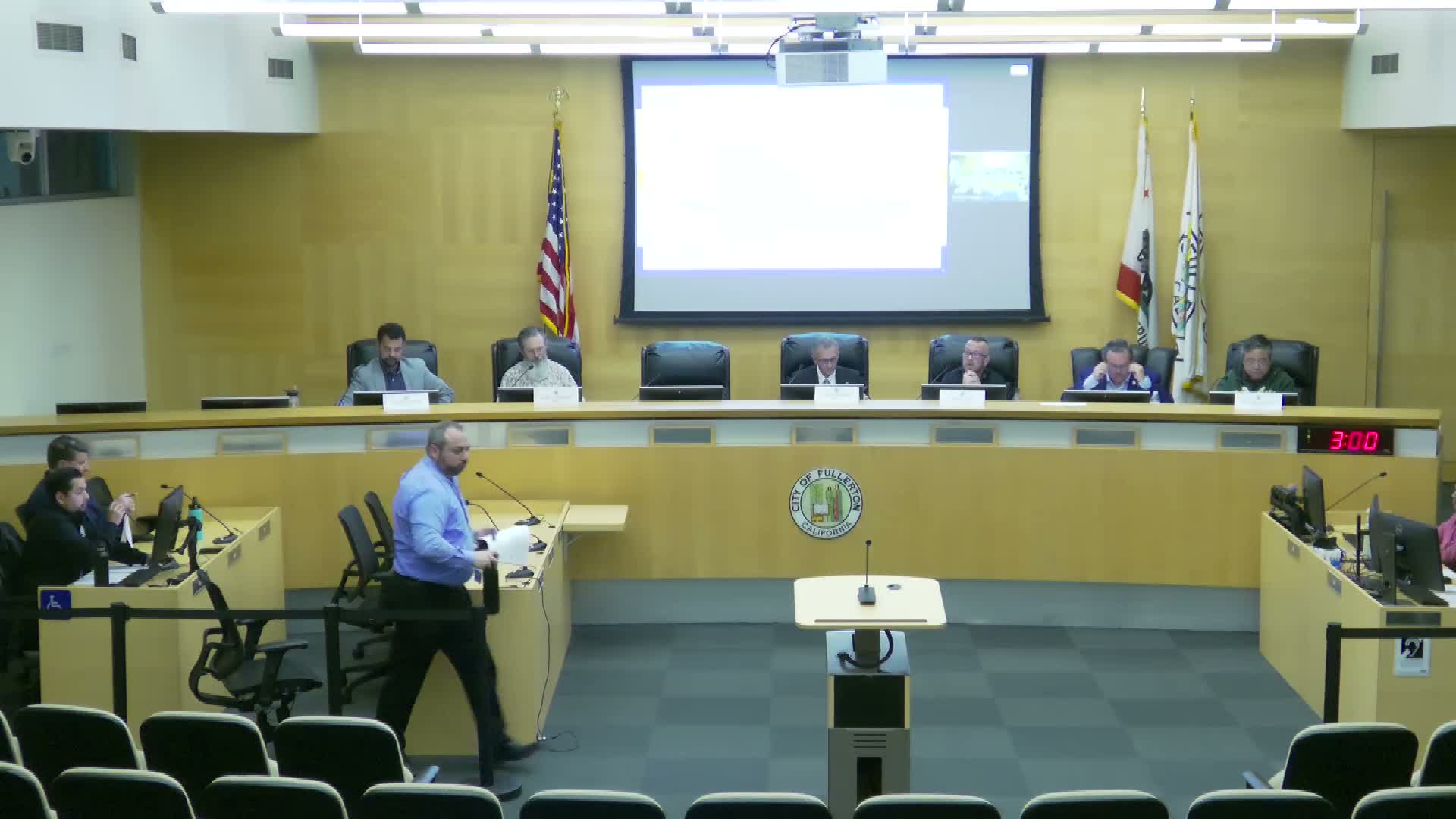
Michael Plonnick, Fullerton’s city traffic engineer, told the Infrastructure and Natural Resources Advisory Committee on Jan. 29 that the traffic engineering division handles signal timing, signage, pavement markings, data collection and coordination with other city departments.
Plonnick said the city manages about 154 signalized intersections and is upgrading signals to LED, expanding vehicle detection systems and pursuing communications improvements to connect more intersections. “We want to do a citywide traffic signal map,” he said, listing priorities that include communication upgrades, CCTV expansion, battery backups and fiber/conduit where feasible.
On camera streams and records, Plonnick said traffic staff live‑streams intersection CCTV to the traffic management center but does not maintain recorded video: “We do not record it. If they decide to record it, that is up to them,” he said, referring to police access. He added that traffic staff gave police viewing access but does not control police policies on recording.
Committee members pressed on security and remote control of devices. Plonnick said the network is not an open internet connection and that external addresses would be locked out; physical tampering in the field remains a risk if a person gains cabinet access. He said the traffic division is small: “You have two-thirds of our traffic engineering department here. You have myself and Julia,” and that the city uses on‑call consultants for additional capacity.
Members also raised local detection and timing issues at specific intersections such as Raymond and Commonwealth; Plonnick acknowledged detection problems there and described field adjustments and plans to replace failing detection equipment.
The presentation closed with discussion of grant funding, coordination with police and schools, and how traffic measures fit into larger CIP and active‑transportation goals.
Plonnick invited committee members to bring specific locations for analysis and to contact the traffic division with concerns. The committee requested that Plonnick’s presentation slides be added to the public file for wider access.