Get Full Government Meeting Transcripts, Videos, & Alerts Forever!
Get email alerts on the Economic Development topic
No spam. Unsubscribe anytime.
New economic development manager outlines Fullerton strategy; residents raise concerns about incentives and downtown upkeep
Summary
James Wirtz, Fullerton’s new economic development manager, gave a wide-ranging briefing on priorities — business attraction, workforce development and real‑estate reuse — and upcoming initiatives (Fox Block, wayfinding, events). Public commenters challenged the department on incentives, downtown maintenance and the absence of public restrooms.
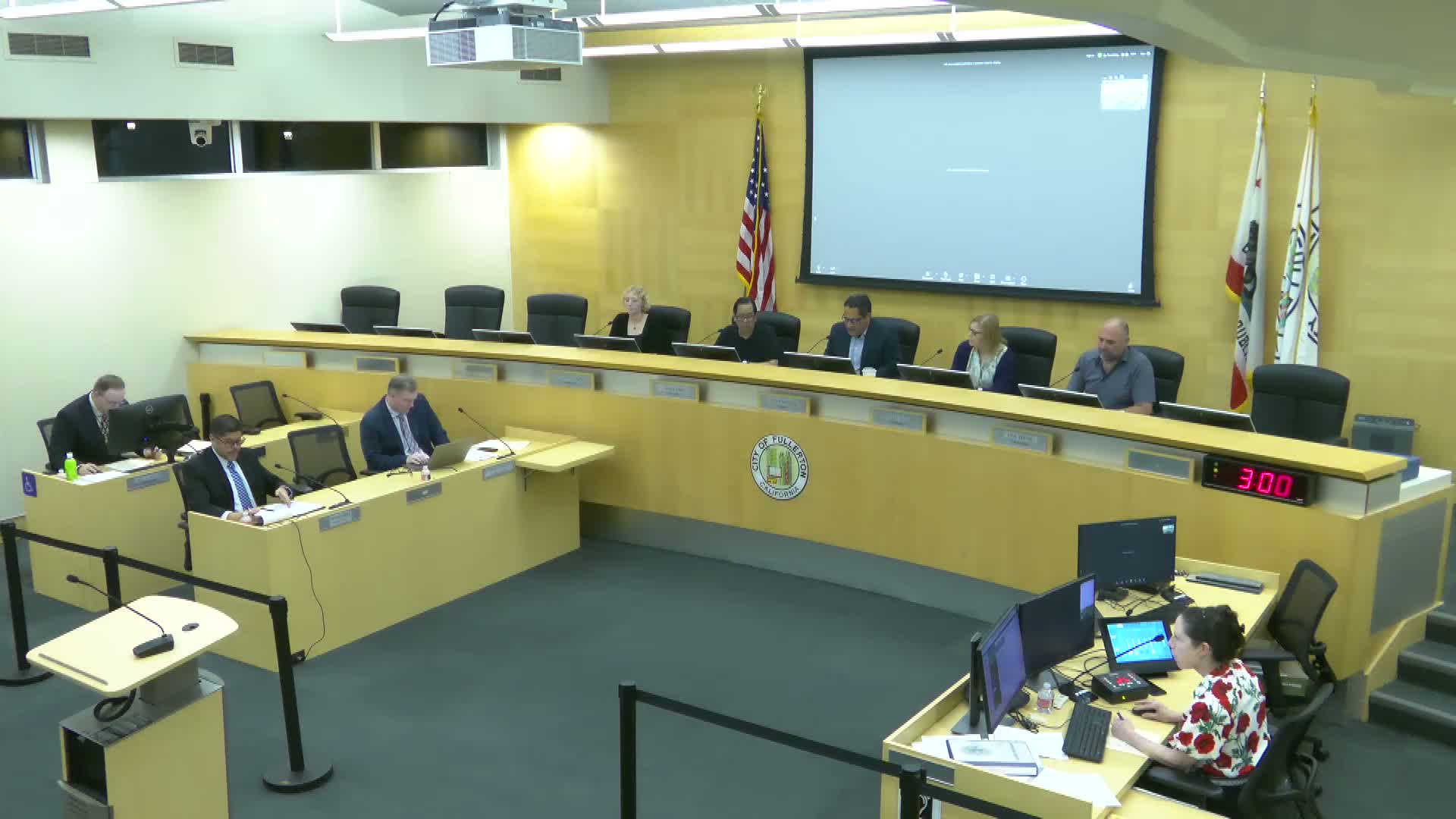
James Wirtz, Fullerton’s newly appointed economic development manager, updated the commission March 11 on department priorities and early initiatives, emphasizing business development, workforce development and real‑estate programming.
Wirtz said recent indicators show a roughly 4 percent unemployment rate and an increase in sales tax receipts from the last reported quarter, and he described departmental steps including e‑review systems, outreach events and a proposed economic development strategic plan for 2026. He highlighted active recruitment efforts to fill retail and industrial sites, named Fox Block as a public‑private redevelopment project and said staff is exploring wayfinding and downtown branding funded by a recent grant. "My job is to go out and to the different industry trade shows, meet with brokers and promote the different real estate development sites that are available here in the community," Wirtz said.
Public comment after the presentation included sharp criticism and specific maintenance complaints. One commenter said of economic development outreach: "Their job is to lie to you," and warned that the department emphasizes recruiting new businesses while overlooking impacts on existing local businesses. Another commenter, Curt Johnston, requested better upkeep at the transportation terminal and cited nonfunctional drinking fountains and blocked access at a train museum exhibit. Activist Curtis Campbell urged more public restrooms downtown and greater transportation access for low‑income residents and seniors.
Commissioners asked about connections between the department's work and housing sites, incentives (including infrastructure givebacks), and major local prospects such as Trader Joe’s and the reuse of the 99¢ store and Harley‑Davidson properties. Wirtz said incentives and local hiring agreements are tools that the city can offer but emphasized that final decisions are private‑sector choices and that the city can generally only incentivize through zoning, process acceleration and, where available, shared revenue arrangements. He also said there were no data‑center projects currently on the city's radar and that zoning in Fullerton would typically preclude uses that concentrate large numbers of people in industrial warehouses.