Get Full Government Meeting Transcripts, Videos, & Alerts Forever!
Get email alerts on the Water Conservation topic
No spam. Unsubscribe anytime.
Fullerton council opts to preserve city‑hall lawn and restore fountains, seeks design options for drought compliance
Summary
After a staff presentation on state turf restrictions and cost estimates, the council voted to keep the front lawn and direct staff to restore the fountains and return with multiple design options that balance public gatherings, shade and water conservation.
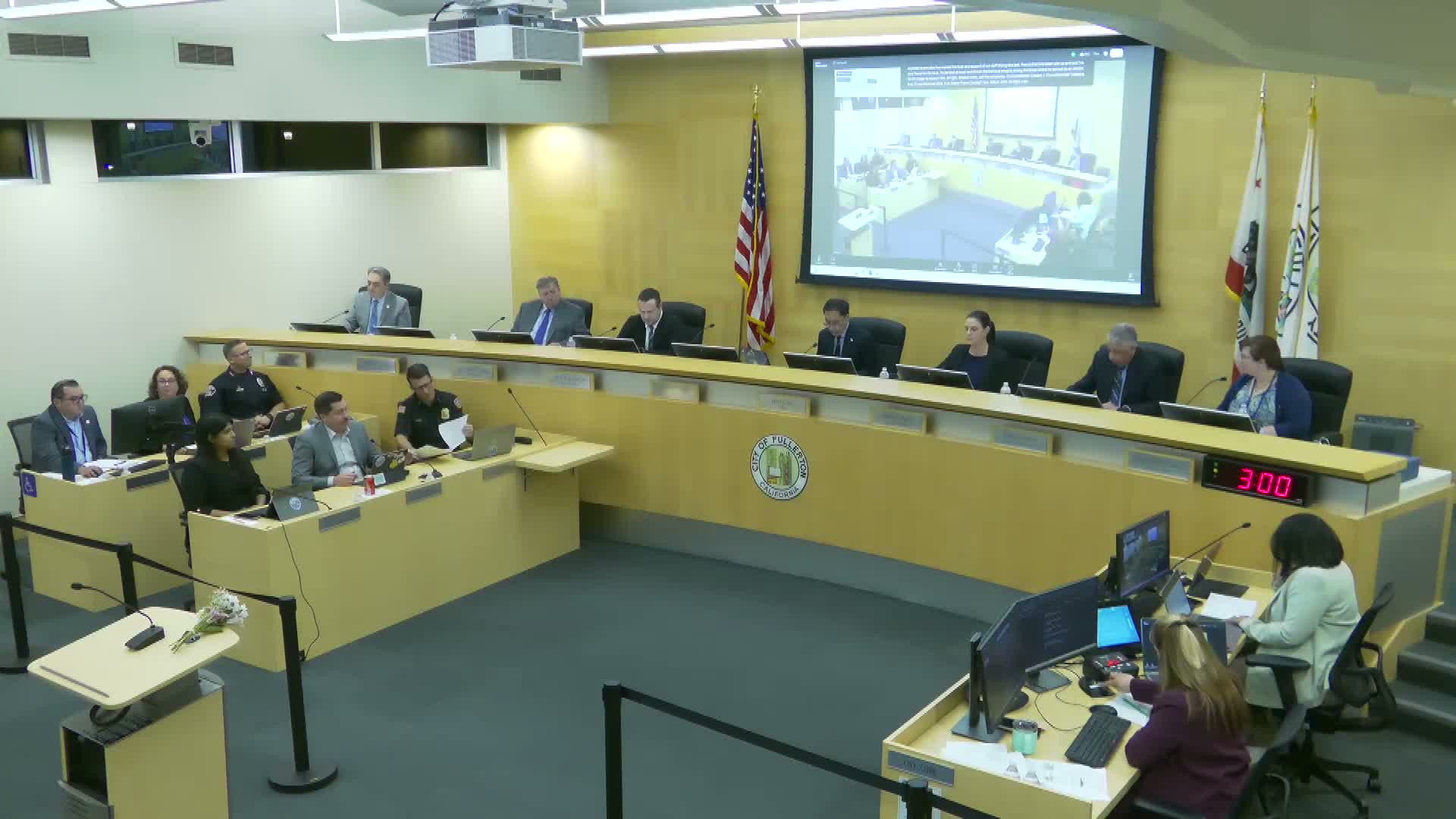
The Fullerton City Council directed staff to preserve the existing lawn in front of city hall and to pursue repairs to make the fountains functional, while asking staff to return with multiple design options that consider water conservation and community use.
Staff framed the discussion around a 2023 state law that restricts potable‑water irrigation of nonfunctional turf on commercial, institutional and some municipal properties, and noted the statutory compliance deadline approaching on Jan. 1, 2027. Staff described community survey results (about half of respondents expressed interest in incorporating a water feature), Metropolitan Water District incentives roughly $4 per square foot for eligible turf conversions, and a range of cost estimates: converting the 15,000‑square‑foot lawn could cost between about $370,000 and $600,000 depending on design and features; repurposing the fountain into a planter was estimated near $50,000, and fully refurbishing the fountain (pumps, relining and mechanical work) was estimated around $200,000. Staff emphasized that any work would be paid from non‑rate revenue in the water fund, not from general fund tax revenue.
"The item before you is a city hall water conservation proposal," the staff presentation began, summarizing state requirements and local options. Water staff also explained there is currently no state‑issued definitive checklist for self‑certifying 'functional turf,' but that hosting roughly two to three events on the lawn annually could support a self‑certification argument.
Public commenters urged a range of approaches: some residents recommended removing turf and planting canopy trees to provide shade and native landscaping at lower cost and with volunteer engagement, while others urged retaining an open lawn for community events, vigils and large gatherings. Several speakers suggested community co‑design and use of artists for creative fountain repurposing.
After discussion about protecting the architectural setting, shade, cost and event function, a motion to restore fountain functionality and preserve the lawn carried. Council directed staff to return with multiple design options that could include improvements, fountain repair or repurposing, and a plan to meet conservation obligations. Staff also confirmed non‑rate water fund sources (for example, lease revenue) would be used for eligible conservation expenditures and that the proposed uses would not impair the water enterprise's rate‑funded obligations.
The council did not adopt a single design at the meeting; staff will return with options, cost breakdowns and phasing proposals for council consideration.