Get Full Government Meeting Transcripts, Videos, & Alerts Forever!
Get email alerts on the Signage topic
No spam. Unsubscribe anytime.
Design Review Committee presses staff for redlines and more review of proposed Orange sign-code overhaul
Summary
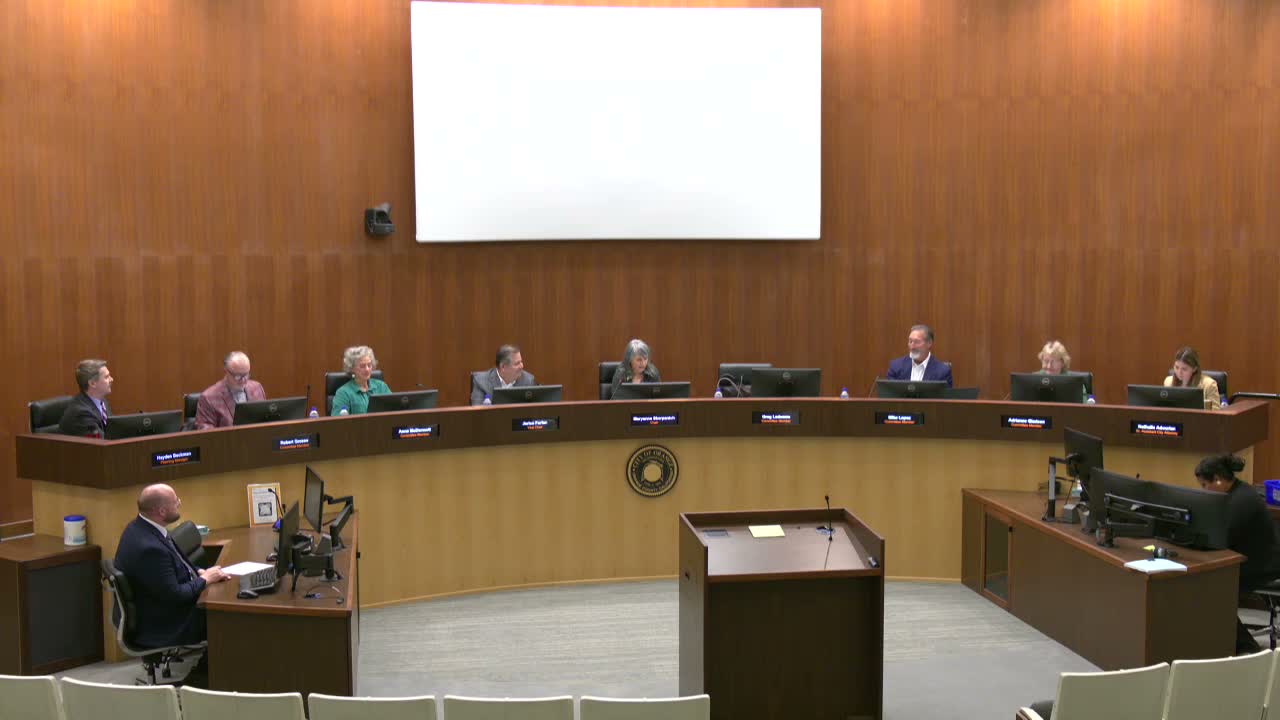
The City of Orange Design Review Committee reviewed a comprehensive, citywide rewrite of the municipal sign code, pressing staff for redlines, clearer technical standards and more time before a Planning Commission hearing tentatively scheduled for April 19.
Senior Planner Arlen Beck told the Design Review Committee that the city has prepared “a big and dense, comprehensive update” to the Orange Municipal Code governing signs that would standardize definitions, create sign districts, and introduce citywide sign-design guidelines while preserving historic-district design review.
The committee used the presentation as a focused review session rather than a vote. Beck said the draft is intended to bring the city into compliance with state and federal law, to give staff clearer enforcement authority and to provide a companion guidelines document for design considerations. He said staff is tentatively planning to take the ordinance to the Planning Commission on April 19 and requested committee comments “preferably by April 1.”
Committee members pressed staff on several technical and policy gaps. Members asked for a redlined comparison or a Word draft and a cross-reference to current code sections so the committee can identify what is new; Beck said much of the ordinance replaces existing sections entirely and staff will provide reference materials. Members also flagged: the treatment and protection of “iconic” signs, limits on illuminated signage in historic districts, how murals with historical text would be handled, whether temporary signs have an effective time limit, sight-line and planting-height standards, and how enforcement would be made proactive rather than merely reactive.
On iconic signs, one member urged the city to identify and protect historic or iconic signs proactively rather than requiring owners to apply for special status. On murals, members sought flexibility for historically oriented text that is non-commercial. Several members said the draft lacked clear technical metrics (for example, font-height guidance, maximum planting height near freestanding signs and temporary-sign time limits) that other cities publish as practical standards.
Staff told the committee that outreach to stakeholders had already occurred over roughly 14–15 months and that code-enforcement staff reviewed the proposed language and believes it provides clearer authority. Following the discussion, staff agreed to produce more legible materials (red lines or a Word draft and consolidated references to current code sections), to consider the committee’s request for more time, and to return the item for additional committee review before the Planning Commission hearing.
The committee received and filed the item; no formal vote on the ordinance occurred at the meeting. Staff said a joint study session on historic preservation is scheduled for March 16 and reiterated the tentative Planning Commission date of April 19.