Get Full Government Meeting Transcripts, Videos, & Alerts Forever!
Get email alerts on the Alcohol Service Restaurant topic
No spam. Unsubscribe anytime.
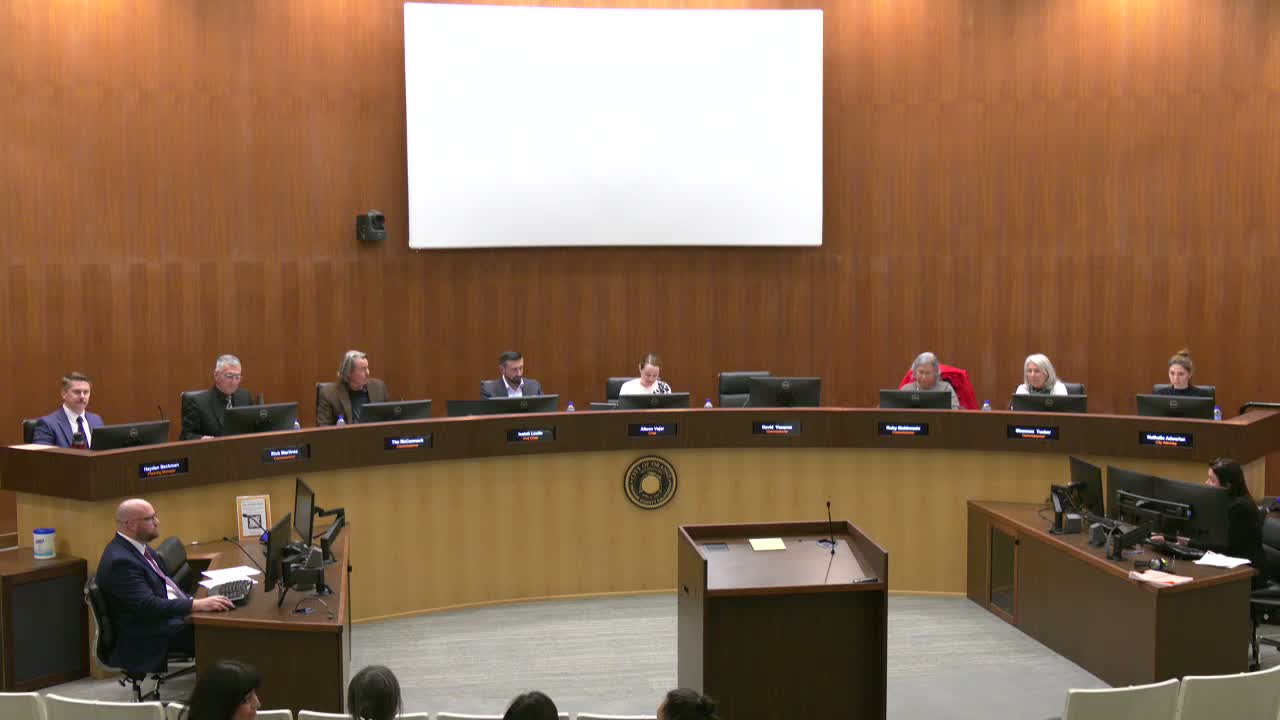
Planning Commission clears Carnesur Cafe to serve beer and wine in Old Town Orange
Summary
The Planning Commission unanimously approved a conditional use permit allowing on-site sale of beer and wine for Carnesur Cafe at 426 West Almond Avenue, with conditions limiting alcohol service to ancillary food service, hours of operation defined, and measures to address nearby sensitive receptors and parking.
The City of Orange Planning Commission unanimously approved a conditional use permit to allow on-site sale of beer and wine under an ABC Type 41 license for Carnesur Cafe at 426 West Almond Avenue.
Associate Planner Arlen Beck summarized staff’s recommendation and said the proposed restaurant would operate within a historic packing house tenant space with 155 indoor seats and no outdoor seating. "Staff finds that a conditional use permit is appropriate to allow for a tailored review of alcohol service in relation to nearby sensitive receptors," Beck said, noting proposed hours of operation from 7 a.m. to 10 p.m. and conditions that alcohol service remain ancillary to food service, prohibit live entertainment, and require food service until closing.
Applicant Art, a founder of the concept, described Carnesur as a scratch-made artisan café, bakery and restaurant designed to be "calm and controlled" and said the concept will create local jobs and respect the surrounding neighborhood. He said the operation would avoid amplified outdoor music and late-night operations and would transition from a daytime counter service to evening table service featuring a live wood fire.
Public commenters raised concerns about parking and sensitive-receptor analysis. Donnie Deweese, representing the Old Town Preservation Association and speaking as a local design professional, said the submittal omitted expected information and questioned whether the site could be supported by the available 77 parking spaces nearby for a 9,000-square-foot, 155-seat restaurant: "I have a difficult time seeing how a 9,000 square foot restaurant and an A3 occupancy next to it would be able to be supported by only 77 parking spaces." Ruben Marchand, representing Light of the World Church, said his congregation’s church was omitted from the staff’s list of sensitive receptors and requested the omission be corrected or that the item be postponed.
Staff said the omission of the nearby church in the published materials was an oversight and reminded commissioners that AB 2097 precludes the city from imposing minimum off-street parking requirements near major transit stops; staff also said they had considered operational characteristics and shared parking arrangements in their evaluation and recommended conditions to mitigate impacts. Commissioners raised questions about ingress, trash access and Sunday-hour impacts; several expressed support for the project. A motion to approve the resolution (PC-02-26 / ENT No. 25-048) passed unanimously.
Conditions of approval restrict alcohol service to be ancillary to food, prohibit live entertainment, require food service through closing, set exterior lighting and signage standards, and require measures to discourage spillover parking.