Get Full Government Meeting Transcripts, Videos, & Alerts Forever!
Get email alerts on the Bagley Keene topic
No spam. Unsubscribe anytime.
Advisory members briefed on Bagley-Keene rules, quorum and limits on serial communications
Summary
Committee counsel summarized Bagley-Keene open-meeting obligations: quorum requirements (nine voting members), 10-day notice for agendas, 24-hour remote-attendance listing, prohibitions on serial communications, record disclosure rules, and limited circumstances for closed sessions.
Committee counsel Michelle Church Reeves gave members a detailed rundown of the Bagley-Keene Open Meeting Act and how it will shape committee operations.
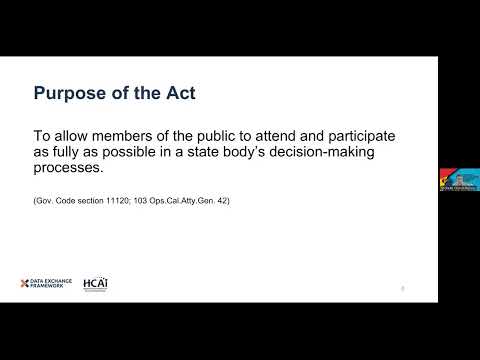
Michelle said the act's purpose is public transparency and described who and what it covers: state boards and advisory bodies created by statute. She noted that the DXF advisory committee's quorum is nine voting members and that, in general, advisory bodies must make meetings open and provide public participation opportunities.
She warned members about serial communications: email or intermediary exchanges can unintentionally stitch together a quorum outside a noticed meeting.
Michelle also reviewed administrative rules: meeting notices should be posted at least 10 days in advance with clear agenda descriptions; materials distributed prior to or during a meeting are generally disclosable under the California Public Records Act; remote participants must be listed at least 24 hours in advance; closed sessions for advisory committees are rare and must cite statutory authority.
Committee members asked practical questions about whether the committee can adopt bylaws restricting remote attendance, what materials must be publicly posted when members rely on outside resources, and how abstentions affect quorum math. Counsel said committee rules can establish participation expectations but confirmed that materials relied on for decision-making must be made public.