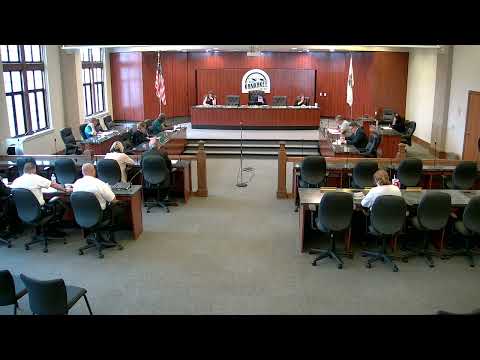
Kankakee audit issues clean opinion; bond financing slashes police and fire pension liabilities
Loading...
Summary
Auditors presented an unmodified FY2025 opinion and told the Kankakee City Budget Committee that bond financings dramatically reduced net pension liabilities for police and firefighters, while the general fund remained strong at roughly $25.3 million.
Auditor Dale Garrity told the Kankakee City Budget Committee that the city’s fiscal year ended 04/30/2025 received an unmodified ("clean") opinion.
"We’ve issued an unmodified or a clean opinion for the year ended 04/30/2025," Garrity said while walking members through the audit binder and the management discussion and analysis.
Garrity highlighted key figures from the basic financial statements: an increase in government‑wide net position of about $12.3 million and an approximate general fund balance of $25.3 million, with an unassigned balance near $14.5 million. He directed members to pension schedules and noted that the city’s use of bond financings led to large, immediate reductions in reported net pension liabilities.
Committee member Johnson described the change as dramatic, saying the police net pension liability dropped from roughly $52–53 million to about $13 million after the second tranche of bond financing. Garrity confirmed the shift, explaining the tradeoff converted certain pension liabilities to bond debt and increased the city’s invested assets in the market.
Comptroller Rogers and committee members asked about differences in recent investment returns for the police and firefighters funds — police returns were near 10% in the last two years while fire returns were closer to 2% — and Garrity said the funds now sit with downstate pension investment pools and are managed separately.
Why it matters: the audit’s clean opinion signals the financial statements are fairly presented, but the composition of liabilities has changed. Officials told the committee that although pension liabilities on paper have fallen, the city now carries more bond debt and will continue to monitor contribution schedules and actuarial assumptions.
The committee accepted the audit presentation and thanked staff and auditors for producing the report; members were invited to review the MD&A and footnotes for line‑by‑line details.
Next steps: committee members said they will follow up on detailed actuarial and investment expense questions to understand long‑term budgetary impacts of the liability conversion.