Draft study: Cameron Parish faces historic property-tax gains as LNG plants come onto rolls
Loading...
Summary
A draft finance study presented to the Cameron Parish Police Jury projects dramatic increases in property-tax revenue as nearby LNG facilities are assessed, prompting discussion of millage consolidation, trust funds and bonding while presenters urged cautious long-term planning.
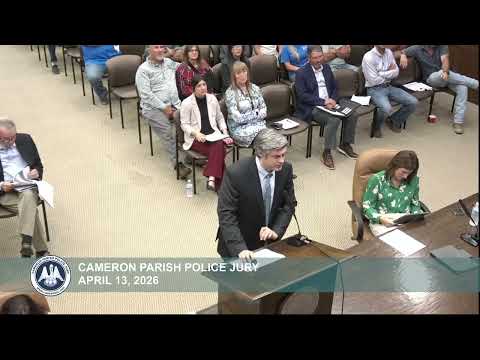
Dan Groff, who presented a draft tax-and-revenue study to the Cameron Parish Police Jury on April 13, said Cameron faces ‘‘an unprecedented fiscal transition’’ as liquefied-natural-gas (LNG) facilities come onto the property-tax rolls. "In 2025, the estimate was about 4,700 people," Groff said, noting population decline alongside large capital investments. "You collected about $73,800,000 in 2025," he added, then outlined scenarios showing property-tax collections rising sharply over the next 11 years if LNG facilities reach full assessment.
Dr. Jim Richardson, a co-author of the report, said the study models expenditures alongside those revenue scenarios and recommends building a trust fund to cover disaster recovery and long-term fiscal shocks. "You need to have money in the bank that will be there in case something absolutely horrendous happens," Richardson told jurors, urging officials to weigh service-level needs, special projects and savings targets before lowering millages.
The presentation showed multiple distribution outcomes: parish-wide consolidation of millages could lower rates dramatically in districts that receive large new assessed value from LNG plants, while districts without LNG assets would see little change. Groff and Richardson illustrated options including consolidated millages, industrial development board arrangements (which would negotiate payments rather than set millages) and bond financing based on a portion of assessed value.
The presenters cautioned the parceling of revenues matters: some revenue from LNG facilities will be tied to the districts where facilities are located rather than evenly spread across the parish. The report also flagged volatility in sales-tax estimates and emphasized that the figures were draft and unaudited; Groff said he had queried the state revenue agency for more robust sales-tax base figures.
Jurors asked how consolidation, board structure and revenue-sharing would be implemented; presenters said those governance questions are for parish officials and would require further analysis. Staff and jurors discussed options for preserving some funds for a trust while reducing millages for residents.
The jury received the draft and presenters invited follow-up questions and revisions. The study will be available for review and the consultants said they would incorporate juror feedback into subsequent drafts. The jury did not take a final vote on millage changes during the morning session.
The most recent procedural step: the jury accepted the presentation and directed staff to coordinate follow-up and provide more detailed figures before any formal millage-setting or bond action.