Get Full Government Meeting Transcripts, Videos, & Alerts Forever!
Get email alerts on the Building Energy Modeling topic
No spam. Unsubscribe anytime.
Pacific Northwest National Laboratory researchers unveil open-source AI to automate building energy modeling
Summary
Researchers at the Pacific Northwest National Laboratory introduced Building Energy Model AI (BEMAI), an open-source multi-agent system designed to automate and speed the preparation of building energy models; the presenter used a 3‑story, 53,000‑square‑foot Tampa office as an example and invited experts to contribute.
Researchers at the Pacific Northwest National Laboratory have developed an open-source autonomous system called Building Energy Model AI (BEMAI) to automate parts of the building energy modeling process, a presenter said.
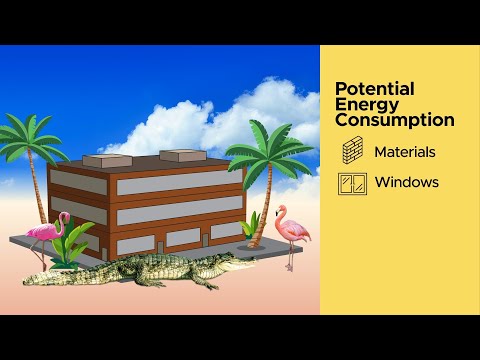
The presenter framed the tool using a sample project — a proposed 3‑story, 53,000‑square‑foot office in Tampa, Florida — and said the core problem BEMAI addresses is the time and specialist coordination required to prepare conventional energy models used to estimate operating costs and meet state and local energy codes.
According to the presenter, the usual modeling workflow requires designers to collect data from multiple experts on materials, window orientation and quantities, HVAC systems, local weather inputs and other variables, a process that can take weeks. "They created a new autonomous bot called Building Energy Model AI," the presenter said, adding that the system is intended to accelerate that preparatory work.
The presenter described BEMAI as a multi‑agent system. A planner agent analyzes the user's prompt and decomposes it into discrete tasks, an orchestrator agent assigns those tasks to specialist agents with domain knowledge, and a summary agent consolidates the outputs to deliver the requested energy savings results. As an example prompt the presenter offered evaluating the energy savings from reducing the window‑to‑wall ratio by 10 percent for a medium office building designed to code in Tampa.
The presenter said using BEMAI made constructing the example building's energy model "a much simpler process than usual." He also said BEMAI is open source and available now and that the research team is seeking experts to contribute and expand the system's capabilities.
No formal funding sources, implementation timeline, or independent verification of BEMAI's simulation accuracy were provided in the presentation. The presenter did not self‑identify a personal affiliation in the transcript; the tool was attributed in the talk to researchers at the Pacific Northwest National Laboratory.
The research team’s invitation for contributors was the last substantive item in the presentation; no votes, motions, or formal actions were recorded.