Get Full Government Meeting Transcripts, Videos, & Alerts Forever!
Get email alerts on the Cemetery Management topic
No spam. Unsubscribe anytime.
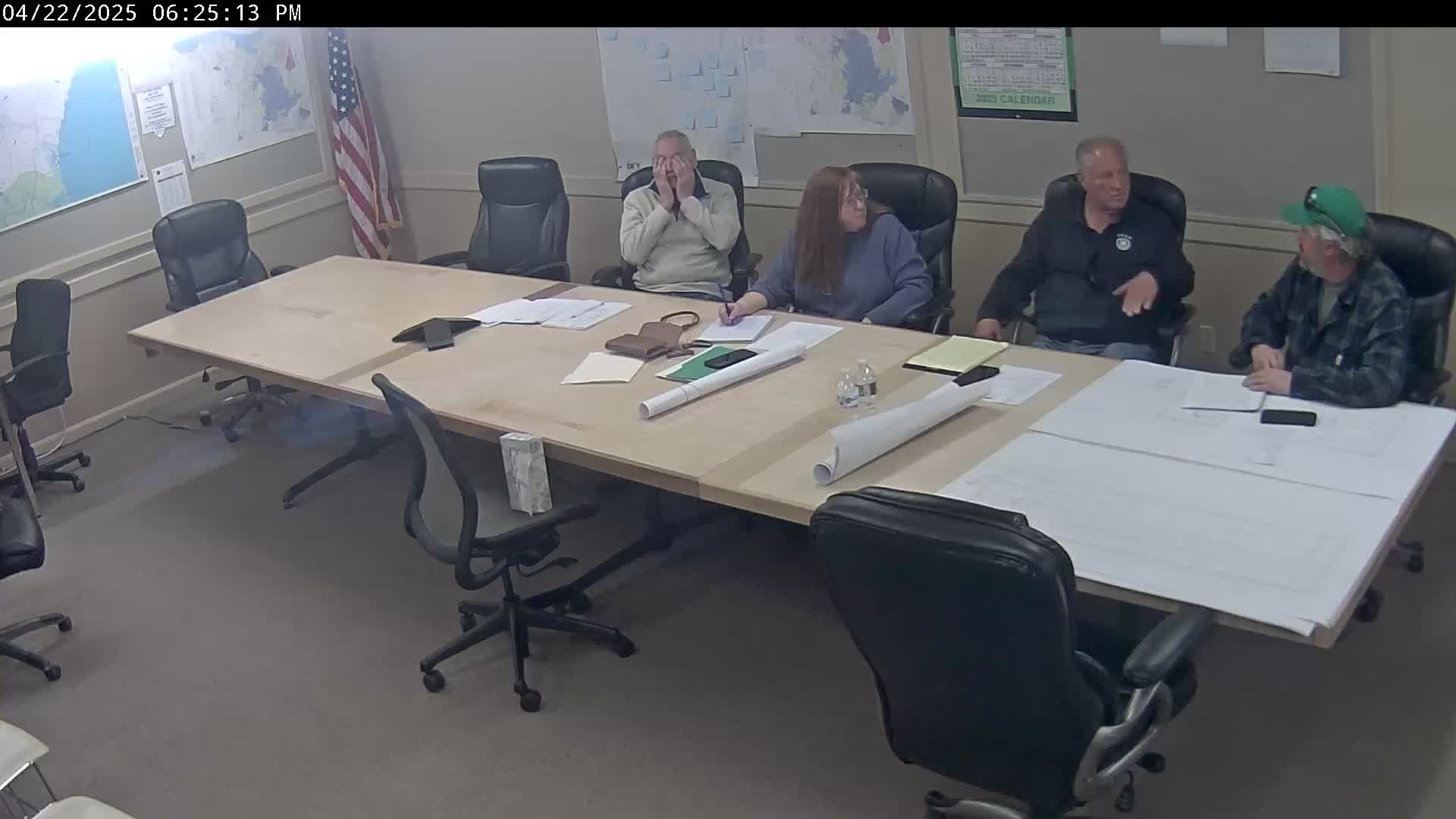
Cemetery trustees discuss marker alignment, burial procedures and headstone foundations
Summary
At a recent cemetery trustees meeting in New Hampshire, members agreed to test re-gridding one section to correct misaligned corner markers, to draft clearer burial and stone-placement procedures, and to clarify foundation standards after members reported inconsistent past practice and conflicting guidance in older bylaws.
At a recent cemetery trustees meeting, members discussed steps to fix long-standing alignment and documentation problems and to set clearer rules for burials and headstones.
The most immediate concern was that granite corner markers and headstones are not aligned with the cemetery map, leaving some plots effectively unusable. Committee member (Speaker 2) described the mismatch and proposed a pilot: "I would like to actually try to put it out. Lay it out one section," the member said, asking permission to re-grid a less active section to show how markers and plots could be realigned.
Committee member (Speaker 3) and others supported the test, noting past walkways and ad hoc placements have skewed rows over time. "We found that last year when we were trying to put in markers… it was even the sections," the member said, describing the practical difficulty of matching existing markers to the map.
Trustees also focused on burial procedures and recordkeeping after members raised uncertainty about who handles scheduling and documentation now that the former sexton, Paul, is no longer serving. Committee member (Speaker 3) said they reviewed sexton duties in New Hampshire and summarized typical responsibilities: purchase of cemetery plots, coordinating burials, maintaining accurate records and plot maps, and supervising grounds work. The member agreed to draft a written outline so installers and families receive consistent instructions and so paperwork is filed uniformly.
A related topic was rules for stone placement and foundations. Members reported inconsistent past practice by installers and families that has contributed to misalignment. Committee member (Speaker 2) said an installer, Thomas Duffy, recommended digging a 30-inch foundation under some stones, while older bylaws from 1957 reference a 24-inch masonry or concrete base. "In the new bylaws, it's not—there's nothing noted in it," one member said. The trustees agreed a written guideline—incorporated into revised bylaws or a standards document—would reduce installer uncertainty and clarify what must be submitted and marked on the map before installation.
Operations and maintenance items drew discussion as well. Members agreed it would be useful to keep small on-site supplies—loam, compost and crushed rock—near the cemetery to speed grading and stone resets and avoid frequent trucking of material from Dover. The group estimated current burials at roughly four to five per year and said a few yards of loam and a small amount of crushed rock would generally meet needs.
Trustees noted several damaged columns and corner posts that need inspection; they will check whether to re-set or remove broken pieces. The group also decided to do a walk-through to take measurements, mark problem areas, and test the re-gridding approach. Committee member (Speaker 3) moved to adjourn at the end of the session; another member seconded. The transcript does not record a roll-call vote.
Next steps recorded by the trustees include conducting the site walk-through and measurements, testing re-gridding on one section, drafting written guidelines for burial scheduling and stone placement, and reviewing whether the bylaws should be revised to specify foundation depth and stone standards.