Get Full Government Meeting Transcripts, Videos, & Alerts Forever!
Get email alerts on the Development Market topic
No spam. Unsubscribe anytime.
Developer Jim Lavelle tells EDA funding is tight, HUD refinance could lower Article 7 borrowing costs
Summary
Developer Jim Lavelle briefed the EDA on regional development conditions, said his team secured a HUD commitment enabling a 35-year amortization and lower long-term rates for their Article 7 building, and warned smaller downtown parcels need gap financing such as TIF or tax credits to be feasible.
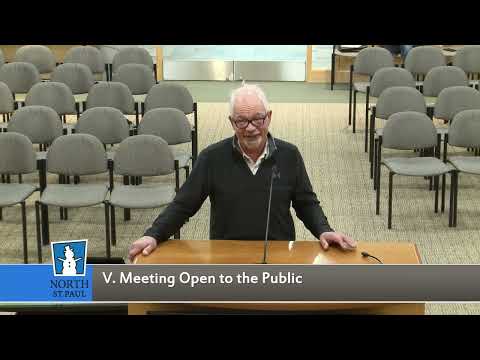
Developer Jim Lavelle gave a market update and described financing outcomes for several projects. He told the EDA his team has a HUD commitment that would allow a 35-year amortization for the Article 7 building and would lower the long-term interest rate the project pays. "We actually just got our commitment last week, which allows us to lock the interest rate," Lavelle said, adding the 10-year Treasury yield fluctuations meant staff had not yet locked the loan but expected closing in roughly 60 to 90 days.
Lavelle walked the board through several local and regional examples to illustrate the market: a recently auctioned 13–14 story building that was bought for about $2.8 million after previous valuations near $40 million, and other downtown sales that reflected pandemic-era tenant losses. He said those sales show how some large office assets have become difficult to convert without major subsidies.
On smaller downtown parcels like the Margaret Street site, Lavelle said financing remains constrained: larger projects can reach scale efficiencies and use tools such as tax-exempt bonds and low-income housing tax credits, but smaller parcels often require TIF or other gap financing. "I just don't know the answer for it today because the resources are so competitive," he said of the Margaret Street opportunity.
Lavelle also described other ongoing projects (a Culver's franchise financing and workforce-housing talks in Duluth) and cautioned that rising borrowing and construction costs compress underwriting cushions for developers, making some previously viable deals marginal under current rates.
Board members asked Lavelle about timing and what the EDA could do; Lavelle encouraged the city to advertise sites and consider incentives that might bridge financing gaps for smaller projects.