Get Full Government Meeting Transcripts, Videos, & Alerts Forever!
Get email alerts on the Street Improvements topic
No spam. Unsubscribe anytime.
Wyoming council orders $2.07 million 2026 street improvement project; homeowners to receive assessments
Summary
The Wyoming City Council approved a resolution to order the 2026 Street Improvement Project, including curb and spot sanitary work, sidewalk repairs and a proposed trail replacement. Staff estimated total street costs about $2,065,410, pedestrian improvements $384,645, and an assessable unit charge of $1,665.65.
The Wyoming City Council on Jan. 20 approved Resolution 260111 to order the 2026 Street Improvement Project and begin preparing plans and specifications for the work.
City staff member Erickson told the council the project would be a mill-and-overlay on several streets — including Forest Boulevard Trail and Lane, Freeport Avenue, 257th Street and 258th Street — with spot curb and gutter replacement, adjustment of manholes and gate valves, restriping near Highway 61 and targeted sidewalk repairs. Erickson said televising of sewer lines shows no major sanitary-sewer repairs are expected.
Why it matters: the council was told the mill-and-overlay approach preserves pavement life and is substantially less costly than full reconstruction. Erickson gave an estimated total street improvement cost of "$2,065,410" and said pedestrian improvements (trail plus sidewalk work) are about "$384,645," with roughly $80,000 of that for sidewalk replacement. He said the number of assessable units is 248, producing an estimated assessment per unit of "$1,665.65," noting the final assessment will be set based on actual project costs at certification.
Erickson also explained assessment process and timing: assessments follow Minnesota Statute chapter 429, property owners will receive notice before the assessment hearing next fall, owners may prepay within 30 days of certification, otherwise assessments are certified to the county and placed on property taxes for the chosen term (staff said typical terms run five to ten years). "State statute identifies a minimum of 20% being assessed when you bond for improvements," Erickson said.
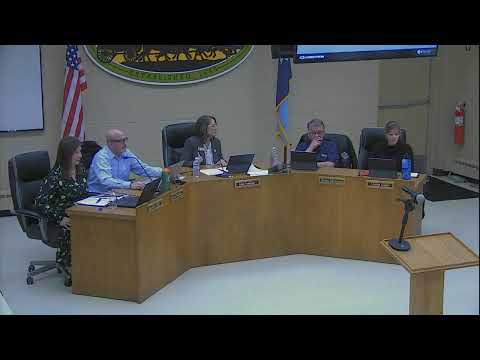
Public comment and council action: during the public hearing resident Bruce Bangler (5983 258th Street) thanked the council and staff for moving the project forward, saying the work should extend the road’s usable life by 15–20 years. After the public hearing the council voted by voice to approve the resolution ordering the project; Mayor Iverson called for the motion and the measure carried with no recorded opposition.
What comes next: staff will prepare plans and specifications, solicit bids (staff indicated bidding in April), and, if a majority of council directs, construction would begin after the school year ends. An assessment hearing is scheduled for next fall where final assessments will be adopted and property‑owner appeal rights will be available.
Details and constraints: Erickson said some trail segments run through rear yards and fences located on city property could need relocation to allow construction access; staff and residents will coordinate on fencing, mail delivery and waste-hauler access during construction. The council and staff discussed doing partial trail repairs versus complete replacement; staff warned piecemeal repair could damage remaining sections and said full replacement now is more cost-effective for the poor-condition stretches.