Get Full Government Meeting Transcripts, Videos, & Alerts Forever!
Get email alerts on the Millage topic
No spam. Unsubscribe anytime.
Nassau County School Board to consider placing 'up to 1 mill' ad valorem operating referendum on November ballot
Summary
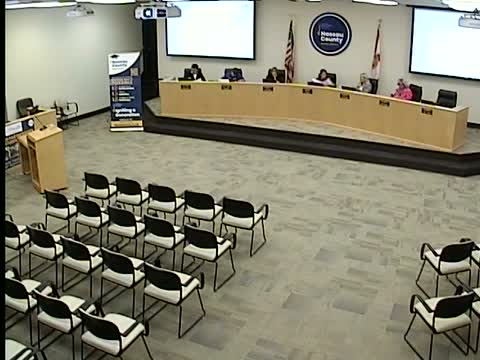
At a workshop on April 6, the Nassau County School Board reviewed draft resolution language directing the county commission to place a referendum asking voters to approve a continuation of up to 1 mill in ad valorem operating millage to fund teacher compensation, arts, athletics and safety; board members debated whether 'up to 1 mill' or a fixed-dollar framing should be used and set the item for the Thursday meeting.
The Nassau County School Board reviewed draft resolution language on April 6 directing the Nassau County Board of County Commissioners to place a referendum on the November general-election ballot asking voters to approve an ad valorem operating millage of up to 1 mill.
The board discussed how revenue from the additional millage would be used "to attract and retain high quality teachers and staff through additional compensation, enhance fine arts and athletics programs, and provide enhanced safety and security for students and staff," language read aloud by district staff during the workshop. Staff noted charter schools sponsored by the district would receive a proportionate per‑student share if the millage continues.
Why it matters: Board members said local funding from the additional millage has supported teacher recruitment and retention and allowed the district to expand programs that are not funded by state categorical sources. Staff explained that the "up to 1 mill" phrasing preserves annual flexibility because the district must set the exact millage after the property appraiser's June certification of taxable values. That schedule is required for the referendum to appear on the November ballot.
Details from the workshop: Staff reviewed property‑appraiser forecasts and illustrative calculations showing how a full 1‑mill levy could translate to roughly $20 million in revenue (figures presented as estimates). Staff explained the practical mechanics: the board adopts a resolution directing the county commission to place the question on the ballot, the property appraiser certifies taxable values in June, and the board sets the precise millage for the following fiscal year (staff said that decision is made in the district's June/July budget process).
Board members debated the ballot language. One member said she opposed tying the public message to a single dollar figure or to a standing $20 million expectation, arguing that language implying a fixed funding target could constrain future boards. Another member favored the "up to 1 mill" language because it preserves the board's ability to set a lower rate in later years if taxable values produce sufficient revenue. Staff told the board that if the item is not brought forward for action at the upcoming meeting, a special meeting would likely be needed given statutory timelines.
What happens next: The board is scheduled to take up the resolution as an action item at the Thursday meeting; staff requested suggested edits by the day before the meeting so changes can be incorporated. If the board approves the resolution, staff will seek county commission placement of the referendum on the November ballot and calculate the district's exact levy after the June certification of taxable values.