Get Full Government Meeting Transcripts, Videos, & Alerts Forever!
Get email alerts on the Transparency topic
No spam. Unsubscribe anytime.
Roswell council reopens debate on anonymous open‑records requests, payment and a public records portal
Summary
Council discussed restoring anonymous open-records requests, mechanisms for prepayment and collection (state law allows prepayment for estimates over $500), and whether filled requests should be posted on a public portal; staff warned of bot/prank volumes and suggested selective portal publishing with redactions for sensitive records.
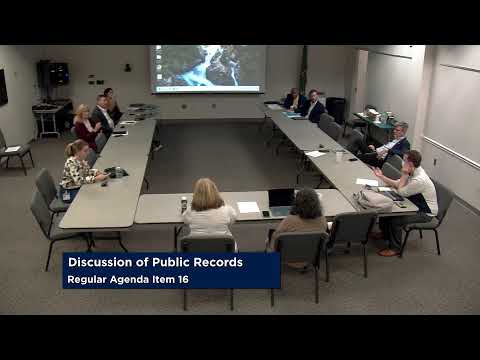
The committee spent extensive time on March 10 discussing whether Roswell should change a 2023 resolution that limits anonymous open‑records requests and on whether to publish fulfilled requests to a public portal.
Assistant City Attorney Joseph Cusack reviewed the current practice: the city accommodates anonymous requests but previously required requesters to come to City Hall to pay or collect certain records; staff noted concerns about high volumes of requests that appear to be automated or used for commercial harvesting of records. Staff said the Georgia Open Records Act permits the city to demand prepayment for requests estimated to cost more than $500 because of the manpower required. For requests under that amount staff may still invoice and withhold further requests until prior debts are paid, but the law does not allow blanket prepayment for smaller requests.
Councilmembers voiced competing priorities: several urged restoring anonymity to protect whistleblowers and privacy‑sensitive requesters; others emphasized the city’s need to avoid being gamed by bots and to recoup staff costs when requesters do not pay for fulfilled work. Council discussed operational options: require an upfront quote and collect prepayment for anonymous requests, accept prepaid gift cards or online payments, or keep the existing identity verification requirement. Staff said their records system can selectively publish fulfilled requests on a public portal and tag items by category; sensitive information could be redacted before posting, and not every request needs to be published.
Council asked staff to return with draft resolutions separating the issues (anonymous acceptance, payment/funding mechanism, and a public‑portal policy with categories/redaction rules). Staff said they will bring proposals back in separate buckets so the body can consider each policy individually.