Get Full Government Meeting Transcripts, Videos, & Alerts Forever!
Get email alerts on the Public Safety topic
No spam. Unsubscribe anytime.
Roswell moves forward with drone-as-first-responder pilot after council questions on data and cost
Summary
Roswell council advanced a trial agreement with Brink/Motorola for an automatically dispatched "drone as first responder" program after police and 911 staff answered council questions about dispatch criteria, data storage and retention, operator control and estimated post-trial cost of about $249,000 annually.
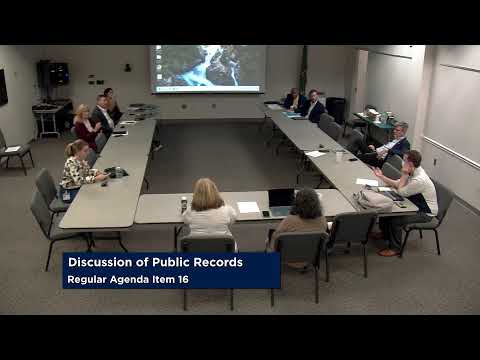
Roswell city officials voted unanimously at a committee meeting on March 10 to move forward to full council a proposal for a pilot program that would deploy automatically dispatched drones to certain 911 calls.
The initiative, presented by Police Chief James Conroy and 911 Director John Potrobosky, would begin with a six‑month predeployment and testing period followed by one year of service at no charge to the city. If the city chose to continue the program after the pilot year, staff estimated an approximate ongoing cost of about $249,000 per year based on the number of drones and factors learned during the trial.
Conroy said the system would station three drone units around the city and automatically dispatch one to qualifying calls — vehicle crashes, crimes in progress, missing persons, fires and fire-alarm activations. He recounted a previous departmental test in which a drone took 22 seconds to reach a nearby incident and provided live video to responders. “We would have the drone on there instantly,” Conroy said, describing use cases including locating Alzheimer’s patients who wander and getting aerial situational awareness for vehicle accidents.
Councilmembers pressed staff on operational and legal details. Potrobosky explained the system’s location feed: when a 911 caller rings, the call’s GPS can be retrieved and used to steer the drone. He said the platform reports a confidence percentage and, in some cases, is within about 15 feet of the caller’s location.
On data retention and access, staff said recorded video from the pilot would be stored on Motorola servers and — if made part of a criminal investigation — transferred into the department’s evidence system subject to Georgia’s retention schedule. Non-investigatory footage would be retained for 180 days on Motorola’s servers and then deleted, staff said. Council members sought contractual safeguards to prevent vendor use of footage for internal training or development without Roswell’s permission; staff said that clause is included in the 50‑page services link and that the city would require explicit permission before vendors repurpose footage.
Legal and privacy questions featured prominently. Council members asked whether the program raises Fourth Amendment concerns. City legal staff drew an analogy to airplane or other public‑viewpoint surveillance, and said warrant and curtilage doctrines still apply; they cited exigent-circumstance exceptions in emergency calls. Staff also confirmed that law enforcement could be subpoenaed for footage if required.
Other council questions addressed operator control (the system supports automatic dispatch and also can be taken over by a human pilot), device size (the shell is mountable and appears under 2 square feet), and measures of program success. Councilmember Christopher Zach urged staff to develop key performance indicators for the pilot so the city can determine whether the investment would be worthwhile given Roswell’s call volume.
Council voted to move the agreement forward to the March 23 council meeting and asked staff to return with additional contract details, data-handling language, and performance metrics before final approval.
The committee did not adopt the agreement at the meeting; it forwarded the item for council consideration after unanimous support to continue to the next step.