Lifetime Citizen Portal Access — AI Briefings, Alerts & Unlimited Follows
Ways and Means advances DECADE Act, tax and education measures; isolated opposition on immigration, wage study bills
Loading...
Summary
The House Ways and Means Committee on April 10 advanced a slate of tax, education and workforce bills — including the DECADE Act and student‑loan tax credit changes — while recording opposition to amendments or final passage on a small number of measures; no bill on the docket was defeated.
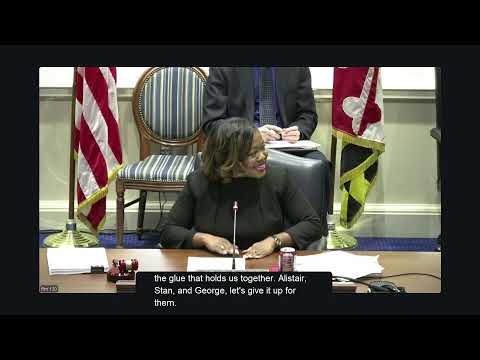
The House Ways and Means Committee, chaired by Janelle Wilkins, moved a broad package of bills forward during its April 10 voting session, advancing changes to economic development and tax policy, adjustments to retirement and student loan tax preferences, and several education and workforce items.
The session began with Senate Bill 388, the DECADE Act. "This administration bill alters, enhances, and transfers various economic development programs and tax credits," Delegate Delia Polakovich Carr said, summarizing amendments that also exempt certain related‑party sales of information technology services from sales and use tax and incorporate provisions from HB 898 regarding the Maryland Economic Development Assistance Fund and related incentives. The committee adopted subcommittee amendments and voted the bill favorably with amendments.
Policymakers also advanced a pair of cross‑filed bills (HB 653 and SB 607) to raise, over five years, the maximum income tax subtraction modification for public‑safety retirement income from $15,000 to $20,000; the measures passed by voice vote. The panel moved SB 704, which allows certain qualified agricultural property owners to transfer ownership to limited liability companies without Maryland estate tax recapture under specified limits, and SB 805/HB 1297, which authorizes the Maryland Higher Education Commission to extend the period to use a student‑loan debt relief tax credit and modifies recapture rules.
On education and workplace policy, the committee amended and progressed HB 1057/SB 720, which requires the State Department of Education to develop guidance and a rubric for responsible use of artificial intelligence in schools and establishes a two‑year AI education collaborative with job‑embedded professional development. Delegate Ebersole said Morgan State University was removed as a required evaluator in favor of broader higher‑education involvement; the amended bills moved favorably.
The panel also addressed labor and procurement issues. HB 1205/SB 764 will convene a work group to study whether a $25 minimum wage for education support professionals (ESPs) is feasible and how county funding formulas would be affected; amendments removed a requirement that the state produce a $25‑scenario calculation. Delegate Miller explained her no vote, saying she worried the study would not sufficiently examine pension impacts, wage compression and local fiscal consequences. "I'm not sure that it's gonna be that deep dive of a study," Miller said, and she announced she could not support the measure for that reason. Despite that opposition, the bill moved forward favorable with amendments.
Similarly, HB 1254/SB 904 — amended to require local boards to submit service‑contract cost comparisons and formal plans for adversely affected employees, and to clarify a state preference for using public‑school employees — was advanced after debate about the breadth of service contracts; Delegate Miller said lingering ambiguity about how many contracts this would cover contributed to her no vote.
SB 810, a Judiciary‑primary bill for which Ways and Means served as secondary, would require school personnel notified of immigration enforcement to contact the county superintendent or designee, expand the definition of "sensitive locations," and restrict sharing information except in response to a judicial warrant. Delegate Ebersole described amendments that change the title of officers enforcing immigration access and add periodic guidance from the attorney general. The amendments were adopted, and on the bill as amended five delegates (Hornberger, Miller, Long, Griffith and Hartman) were recorded as opposed; the bill nevertheless moved forward favorable with amendments.
The committee also approved a Washington County local bill (SB 193) adding a sales and use tax exemption for materials used in a specified target redevelopment area with added reporting and records‑retention requirements, and SB 767, which authorizes localities to grant property tax credits to commercial buildings leased to small businesses in designated arts and business districts.
Chair Wilkins closed the session with personal remarks thanking staff and subcommittee chairs and noted the committee may return to vote from the floor if needed. "There is not a single person that I would not want on this committee," she said, praising the vice chair and staff before adjourning.
Votes at a glance: the committee moved all listed bills favorably (many with amendments). Notable recorded opposition included five delegates on SB 810 (opposed to amendments or final passage as amended) and several no votes on HB 1205/SB 764 and HB 1254/SB 904 from delegates citing concerns about study depth and ambiguous procurement scope. No final defeats were recorded on the docket.