San Antonio Council hears $71M+ plan to modernize financial systems; staff recommends local integrator for Phase 3
Loading...
Summary
City finance staff outlined Phase 3 of the Connect program to replace legacy SAP systems, described vendor evaluations (IBM, Ernst & Young, Accenture and a smaller firm), cited prior spending and requested council consideration on April 30; no vote was taken.
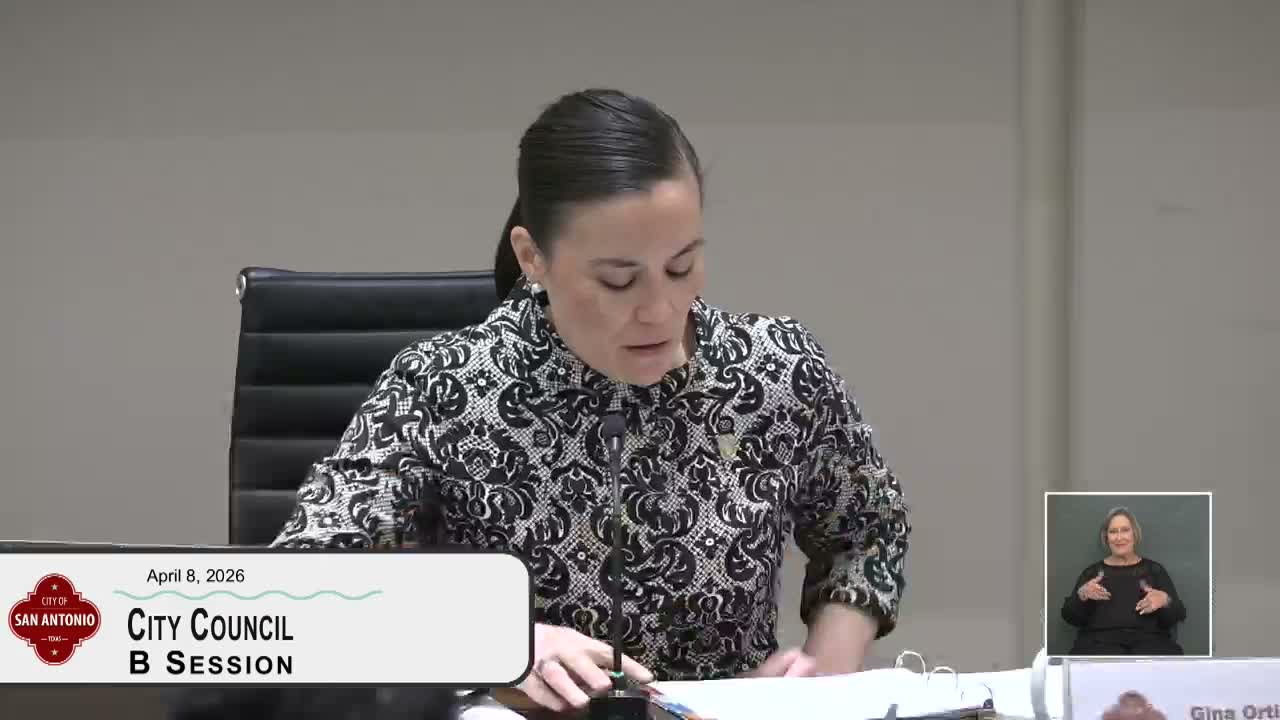
San Antonio city finance staff on April 8 updated the City Council on Phase 3 of the Connect program, a multi-year effort to modernize the city's financial and human-resources systems and replace aging SAP infrastructure.
Troy L, the city's director of finance, said the work is a business-led transformation that follows two earlier phases and 18 months of preplanning. "Hemos gastado 22000000 en licencias de software, 15000000 de en contratistas," he told the council, and staff described a program total referenced in the presentation at about $71.1'-$71.9 million. He said the integrator price under negotiation is about $14,000,000 and that the city has already budgeted major license and contractor expenditures.
The presentation outlined key project milestones and governance: staff reported 14 planning sessions and several hundred identified improvements during design, described an ATB Activate implementation approach, and said the base integration window is three months followed by user training and acceptance testing. Staff targeted Oct. 1, 2027, as the system go-live to align with the fiscal year and asked the council to consider the request at the April 30 meeting.
On procurement, staff said four firms submitted proposals (IBM; Ernst & Young/ENY; Accenture; and FarcCard/FarcCats Studios), and three advanced to interviews. The written scoring weights discussed in the presentation included price and local-preference points; staff noted ENY received strong local-preference scoring. Council members asked for additional detail about scoring methodology, and staff described how interviews and price adjustments shaped recommendations.
Staff recommended engaging ABM, described in the presentation as a San Antonio-based systems integrator, for training and implementation support. According to staff, ABM would serve as a small-prime integrator providing training and early-phase assistance on a projected two-year engagement with renewal options.
Council members sought specifics on several fronts: how existing interfaces (including spreadsheet-based processes) would be handled, what workforce impacts and retraining would be required, and how advanced features sometimes described as "artificial intelligence" would be priced and phased. On AI, presenters said built-in user-assist features come with the platform but that more advanced AI tools would be an additional, potentially costly add-on and would require piloting and assessment of pricing credits before citywide rollout.
Councilmembers also raised priorities for local hiring and inclusion of small local firms in subcontracting opportunities. Staff said the procurement includes local-preference components and that the evaluation factored in local workforce participation.
No formal votes or ordinance adoptions were recorded in the public session. The council moved into executive session to discuss legal matters and collective-bargaining negotiations "de conformidad a codigo del gobierno de la ciudad de Texas," then reconvened and adjourned; the public record states no action was taken following the closed session.
Next steps: staff requested the council's consideration on April 30 and indicated they would return with contract documents and further cost detail as negotiations finalize specifics.