Vice chair raises concerns over Flock cameras and social-media monitoring; urges county review
Loading...
Summary
Vice Chair Misty Rountree outlined privacy, equity and oversight concerns with Flock license-plate cameras and a social-media monitoring product called LifeRaft, urging Henrico County to examine controls and consider stronger safeguards.
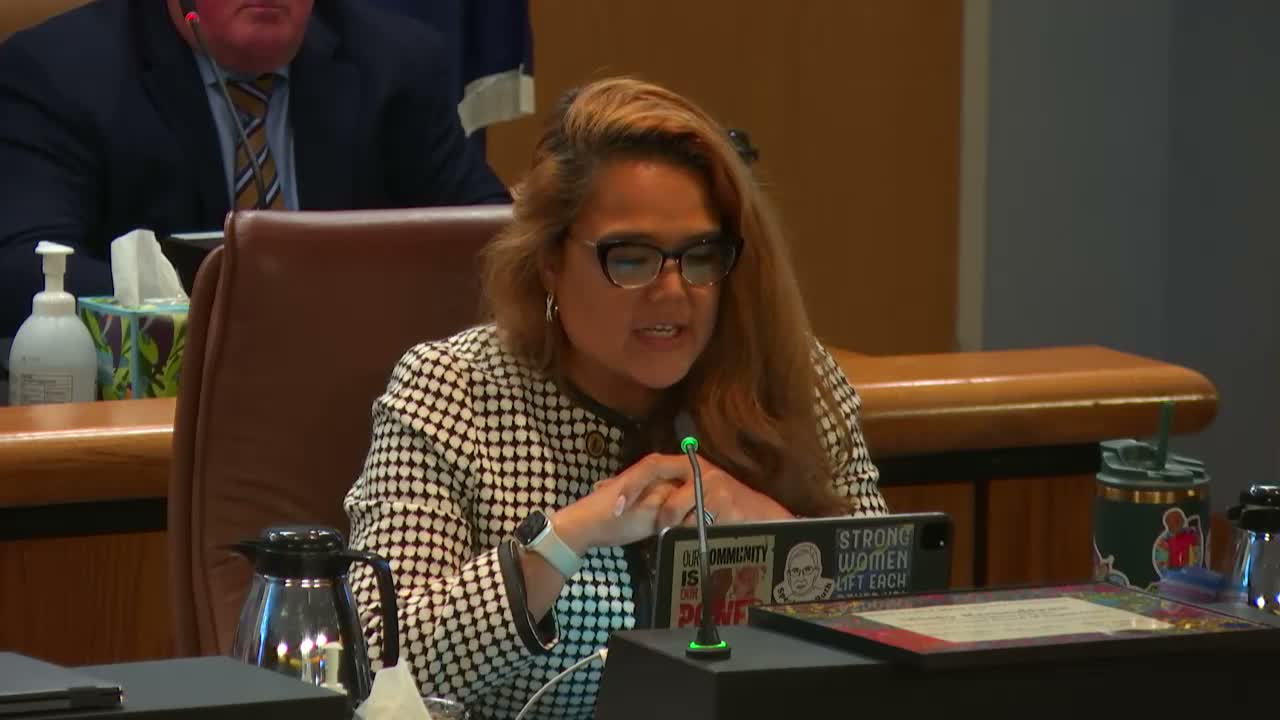
Vice Chair Misty Rountree used her allotted time during budget discussion to press the board and county staff on the use and oversight of surveillance technology in Henrico County, highlighting potential privacy and equity risks from aggregated license-plate data and social-media monitoring tools.
Rountree said Flock license-plate cameras are designed to contribute to a national database and warned about the aggregation of location data. "A Virginia court in 2024 likened Flock cameras to tracking devices," she said, arguing that while a single plate photo is benign, the aggregation and use of artificial intelligence can create a detailed mosaic of a person's movements and associations.
Rountree also described LifeRaft, a tool for monitoring online content and building profiles from social-media signals. She said the technology assigns threat scores, can link accounts through algorithmic associations, and advertises predictive flagging. "It uses AI to establish relationships between accounts and people," Rountree said. "It assigns threat scores based on its own algorithms." She flagged audit and compliance gaps in Virginia’s 2025 law governing access and retention for surveillance data, citing a 2026 report that found self-reported compliance problems and continued cross-jurisdictional access in some agencies.
Rountree noted governments and journalists have uncovered instances where Flock settings allowed wider access than local officials expected and where audit logs were scrubbed. She urged the county to consider local controls and stronger oversight: pulling audit logs, clarifying retention and access policies, and reviewing contracts to limit national or federal lookups.
The vice chair emphasized her comments were not a criticism of the local police chief personally. "This is about a technology that is evolving and expanding far beyond the grasp most of us can begin to understand," she said, and asked her colleagues to consider whether Henrico could lead on safeguards that protect constitutional rights while providing effective investigative tools.
Next steps and context: Rountree suggested the board direct staff to examine county agreements, audit procedures, and possible policy changes to govern use and access to third‑party surveillance data. No formal resolution was introduced at the meeting, but the remarks put technology oversight on the board’s radar.