Lifetime Citizen Portal Access — AI Briefings, Alerts & Unlimited Follows
Multnomah County 2025 employee survey shows improved overall scores but persistent workload and equity gaps
Loading...
Summary
The county’s Evaluation & Research Unit briefed commissioners on 2025 survey results from 3,602 employees (57% response). While job-satisfaction and belonging metrics improved since 2019, staff reported heavy workloads, compensation concerns and lower belonging among specific groups; ERU outlined a July–September action plan aligned with the county strategic plan.
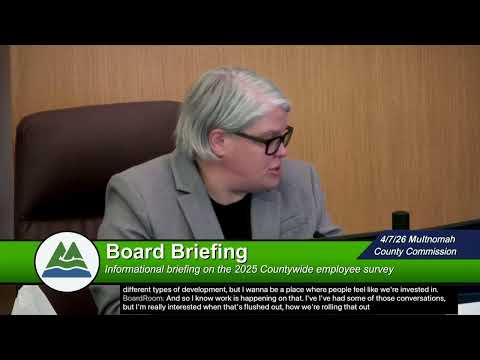
Multnomah County officials presented key findings from the 2025 countywide employee survey at a board briefing, describing both areas of progress and continuing challenges in workload, compensation and equity for certain staff groups.
Samuel Ashby, director of strategic initiatives, said the survey is the county’s primary tool for tracking employee experience and links directly to the county’s strategic and workforce equity plans. Allison Sachet, manager of the Evaluation & Research Unit, described methods and said the county received 3,602 completed surveys (a 57% response rate) and 1,056 open-ended comments.
Analysts reported that, compared with 2019, all five measured areas improved (job satisfaction, supervision and communication, belonging, work climate general, work climate identity). But persistent concerns remain: 71% of respondents agreed their workload is manageable, only 64% agreed they were compensated fairly, and 50% said they were frequently overwhelmed by work demands. Disaggregated data showed some groups—employees with disabilities, transgender and queer employees, and American Indian/Alaska Native staff—scored significantly lower on belonging and work climate identity.
The ERU recommended aligning survey responses to the county strategic plan and rolling out departmental action plans. Ashby said the county will use a manager guide to gather staff input, run cross-department workshops after the budget is adopted, and aim to publish measures and strategies by October 2026.
Commissioners welcomed the data and asked for access to the full disaggregated dashboard, additional cross-tabs by employee level and income band, and plans to engage impacted staff in co-creating remedies. Human Resources and the Chief Diversity & Equity Officer said HR will prioritize areas with lower staff ratings, including disability and transgender staff experience, and will partner with departments on implementation.
The briefing closed with requests from commissioners for further follow-up and a commitment from ERU to provide the dashboard and meet individually with commissioners to walk through the data.