Spokane Plan Commission recommends preferred growth map to city council amid debate over natural areas and housing
Loading...
Summary
The Spokane Plan Commission voted to recommend a draft preferred alternative land‑use map for Plan Spokane 2046 to City Council on April 14, 2026. The staff‑proposed map emphasizes downtown and transit corridors to meet housing targets but drew public comments urging stronger natural‑area protections, affordable homeownership and fuller transportation analysis.
The Spokane Plan Commission voted on April 14, 2026, to recommend a draft “preferred alternative” land‑use map and related direction on the Plan Spokane 2046 environmental impact statement (EIS) to City Council, advancing the city’s next steps on housing, climate and land‑use policy.
City planning staff presented the draft preferred alternative as a high‑level map that combines elements of two studied approaches—one that distributes growth across corridors and another that concentrates growth in the center city and regional hubs. “The preferred alternative is a combination of those,” Terrell Black, a city planning staffer, told the commission, noting the map focuses on increasing high‑density residential and mixed use near transit and downtown.
Why it matters: the preferred alternative is the staff recommendation that will guide preparation of the final EIS and the future land‑use plan map, which in turn informs later zoning and code updates. Staff told the commission the draft EIS and community engagement informed the map; a final EIS is anticipated in the third quarter of 2026.
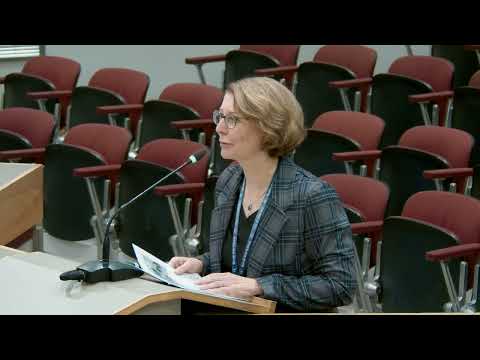
Public testimony at the hearing highlighted competing priorities. Kirsten Angel of Spokane Urban Nature urged explicit mapping and protections for natural lands and critical urban habitat, saying, “Natural lands and overall natural infrastructure such as critical areas and open space need to be identified in the preferred alternative's land use map, so that future development will not erase them.” Karen Mobley, also representing Spokane Urban Nature, said the current maps miss smaller but valuable urban natural sites and called for stronger mapping and enforcement.
Advocates for housing and downtown growth offered different emphases. Daniel Leroy, director of government affairs for Habitat for Humanity Spokane, urged the commission to embed permanently affordable homeownership—land trusts and shared‑equity models—into the policy framework, arguing these forms are essential to create long‑term ownership pathways for households below 80% of area median income. Kevin Campbell of the Downtown Spokane Partnership supported concentrating growth in downtown and regional hubs, citing a downtown housing study that “identified a need for 3,200 net new market rate units in the Central Business District over the next 10 years.”
Technical and infrastructure concerns were also raised. Greg Figg of the Washington State Department of Transportation said the draft EIS’s transportation analysis did not model some West Plains land‑use densities shown on the maps and asked staff to evaluate potential failed intersections and access impacts to Fairchild Air Force Base in more detail: “the DEIS, the transportation analysis did not, model that land use to the density that is being proposed in the maps,” he said.
Other commenters urged a more mixed approach to affordability and housing types. Jim Frank, a housing advocate, cautioned that apartment construction can be more heavily subsidized than smaller middle‑housing types and urged policies to enable townhomes, cottage housing and small lots as lower‑subsidy alternatives. Darren Watkins (presenting Spokane realtors’ data) and others emphasized marketplace preferences and land‑availability questions.
Commissioners stressed the preferred alternative is a policy direction and not an immediate zoning change. Multiple commissioners asked staff to ensure subsequent land‑use map and zoning changes are accompanied by substantial public engagement and by findings that reflect neighborhood context, natural‑area protections and infrastructure constraints. Chair emphasized the map is “instructive, not about final decisions.”
Vote and next steps: after deliberation the commission moved and seconded a recommendation that staff forward the preferred alternative to City Council. The clerk recorded the roll call, and the chair announced the motion “passes, 6 2 1.” Staff said they will prepare findings and forward the commission’s recommendation to City Council, likely in May; staff anticipate the final EIS in Q3 2026 and subsequent land‑use map and code work later in the year.
The action directs staff to use the preferred alternative as the basis for preparing the final environmental analysis and for drafting a future land‑use plan map; specific zoning and development code changes will come later and will be subject to separate public review.