Get Full Government Meeting Transcripts, Videos, & Alerts Forever!
Get email alerts on the Affordable Housing topic
No spam. Unsubscribe anytime.
Loveland council approves first reading to reimburse housing authority roughly $1.4 million for EDGE Phase 3
Summary
On first reading the council approved reimbursing the Loveland Housing Authority about $1.4 million to maximize federal low-income housing tax credit equity for EDGE Phase 3, adding 69 affordable units and bringing the development to 205 total units; council said the reimbursement follows an existing intergovernmental agreement and will be neutral to the general fund.
The Loveland City Council on Jan. 22 approved on first reading Ordinance No. 6752 to enact a supplemental budget and appropriate roughly $1,400,000 to reimburse the Loveland Housing Authority for previously paid project fees tied to the EDGE Phase 3 affordable housing development.
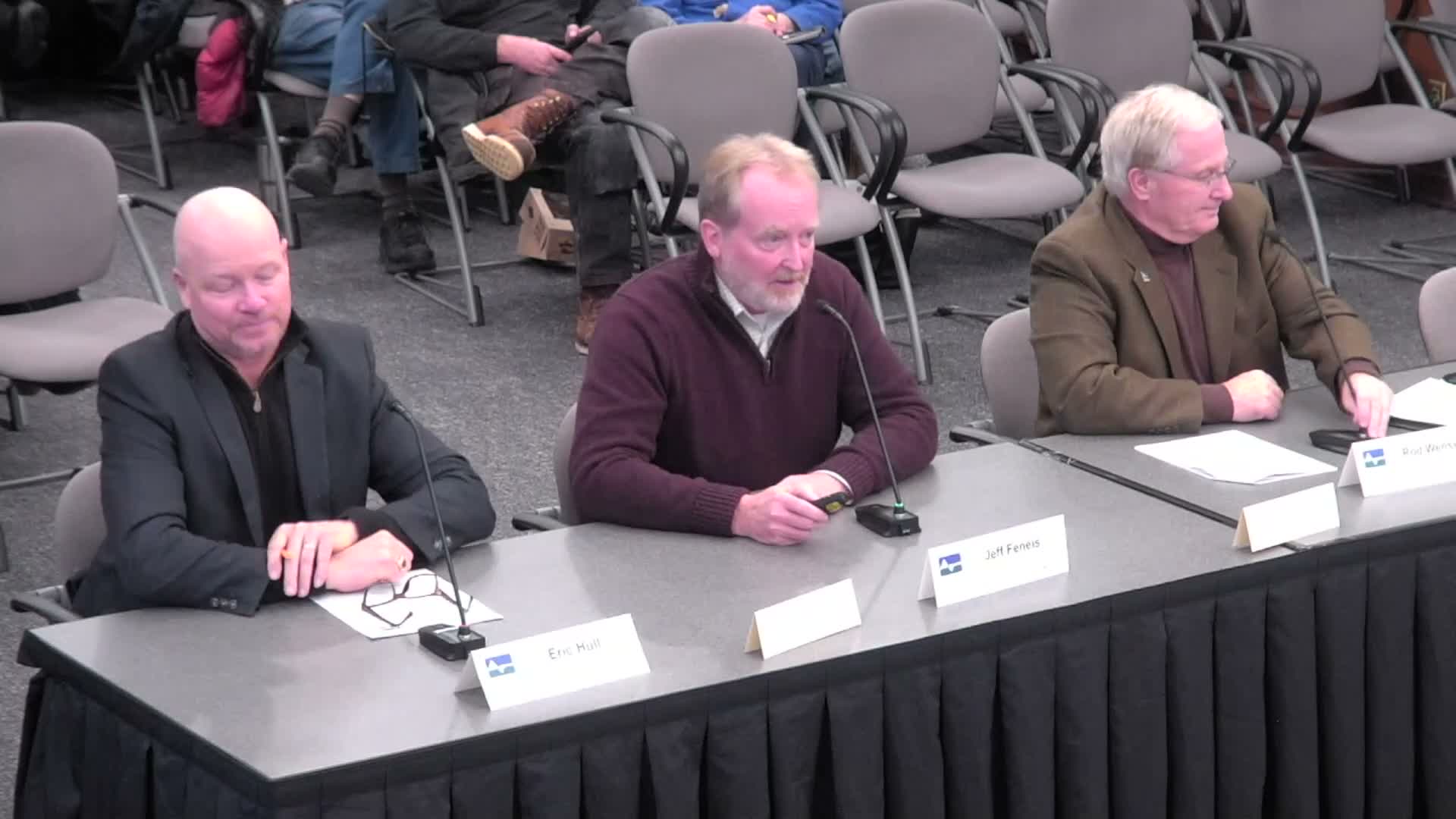
The funding request was presented by Rod Wintzing, deputy city manager, and Jeff (Loveland Housing Authority), who described EDGE Phase 3 as the final build-out of a three-phase development. Jeff said the third phase adds 69 units and will push the EDGE campus to 205 affordable units that serve households at or below 60% of area median income and include 10 permanent supportive units for formerly homeless veterans.
"So I'm here tonight to simply ask for the roughly $1,400,000 back to the housing authority," Jeff said, explaining that the intergovernmental agreement lets the authority pay development fees up front so those costs increase the project's basis and attract greater investor equity through low-income housing tax credits, then request reimbursement from the city.
Deputy City Manager Rod Wintzing and staff clarified the mechanics: rather than permanently waiving fees, the housing authority pays certain permit and use-tax amounts and the city later reimburses them per an IGA authored in earlier project phases. Rod told council that process was reviewed with city attorneys and is intended to increase the amount of private equity available to the project.
Councilors asked about partner organizations, wait lists and budget impacts. Jeff said the housing authority’s wait list runs to roughly 2,000 households and noted that the project partners with nonprofit service provider Aspire to offer supportive services to residents. Rod told Council the action is neutral to the general fund because the housing authority has already remitted the fees and the reimbursement merely returns those specific funds under the preexisting agreement.
Several members of the public spoke both in favor and against using one-time or reserve funds for housing projects. Larry Sarner urged fiscal caution and questioned priorities, while Councilor Samson and others stressed that affordable housing was a high priority in past community surveys and that the project fills an urgent need.
Council approved the ordinance on first reading with an 8–0 roll call vote. The ordinance will return for second reading per standard procedure.
The council record shows the action was approved as a first-reading appropriation to reimburse the housing authority under an existing IGA; related zoning, developer and tax-credit processes will proceed in coordination with the housing authority and project partners.