Kennewick City Council to consider ban on virtual-currency kiosks after Spokane testimony
Loading...
Summary
After hearing Spokane Police data and a Spokane detectivedescribe large local losses tied to crypto ATMs, Kennewick councilors signaled consensus to bring an ordinance banning virtual-currency kiosks back for possible adoption to protect vulnerable residents.
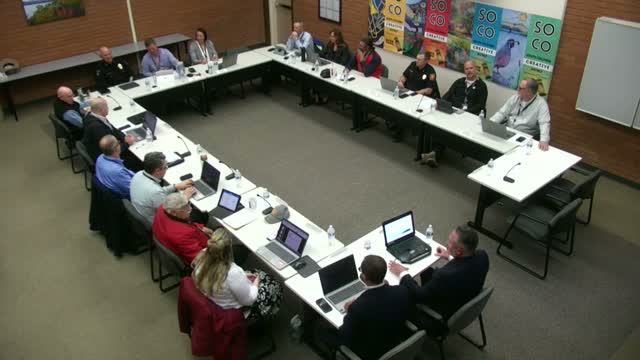
Kennewick City Council members heard detailed loss and enforcement data on virtual-currency kiosks and signaled consensus to bring an ordinance banning the machines back for potential adoption.
City staff opened the presentation by noting new material since an earlier workshop and said recent FBI figures show 13,460 complaints nationwide in 2025 about virtual-currency kiosks, resulting in more than $389 million in reported losses. Staff and a Spokane Police detective also told the council that the Tri-Cities reported $2,423,192 in kiosk-related losses over three years, and that $1,065,301 — about 43.96% — of that total involved kiosks located in Kennewick.
Detective Tim Schwaring of the Spokane Police Department described investigations tracing funds from kiosk transactions into offshore cryptocurrency wallets and the limits of international cooperation. "I probably did over 100 cases where I was literally tracing money overseas getting absolutely nowhere," Schwaring said, and he recounted that Spokane banned kiosks by ordinance C36704 on June 16, 2025 and that reported kiosk-related complaints dropped anecdotally after the ban.
Schwaring and staff explained the mechanics that make kiosks attractive to scammers: most machines perform one-way cash-to-crypto transfers, often with fees of 10% to 30% that immediately reduce victims' recoverable amounts; kiosks typically do not generate the same Bank Secrecy Act reports (CTR filings) that would exist for large bank deposits, complicating tracing and recovery.
Council members pressed staff and the detective on enforcement, data limits and alternatives. One councilor described a local case in which a resident withdrew $11,000 and used a kiosk after a convincing scam call; another cited examples of much larger withdrawals and said the losses can "wipe out an entire life savings." Several members said education helps but does not reach all victims, and that Spokane's ban — combined with outreach and business cooperation — provided a level of protection that education alone had not achieved.
City management told councilors staff had been holding a draft ordinance and asked whether council wanted it placed on a future agenda. By the end of the discussion, multiple council members indicated they would like to see the ordinance returned for potential adoption.
Next steps: staff said they would bring the draft kiosk-ban ordinance back to the council for further consideration and potential action at a future meeting.