Public commenters raise ballot‑barcode, medical‑consent and open‑records concerns; meeting includes several heated remarks
Loading...
Summary
Speakers at the April 8 public‑comment period alleged that absentee ballots contain identifying barcodes, described problems with medical consent signature pads, complained about public‑records delays and raised other local grievances; several speakers were warned for disruptive remarks.
A mix of legal claims, consumer complaints and political criticism dominated the public‑comment period at the Delaware County Council meeting April 8.
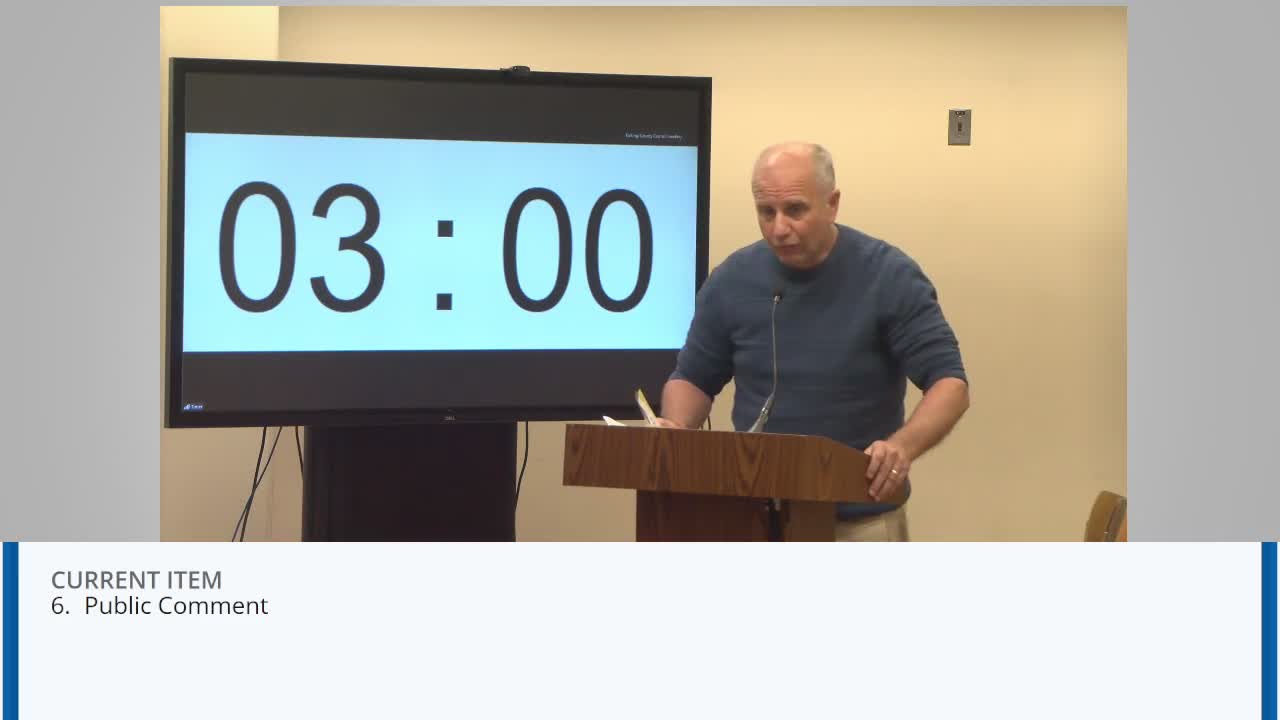
Robert Mancini, who identified himself as media and said he is party to litigation (case CV‑2025‑010541), accused the county of printing barcodes on absentee ballots that he said ‘‘contain a unique identifier that links this ballot to this voter, rendering the secrecy envelope invalid.’’ He asked county counsel to remove the barcodes; the allegation references filings and affidavits cited on the record.
Asali Carter of Drexel Hill described a recent doctor’s visit in which she said staff required her to sign an electronic pad without seeing the full terms; she asked council to consider an ordinance requiring providers to provide privacy and financial‑responsibility statements for review in advance and to prohibit ‘‘blind’’ electronic signatures. "My ask is that there could be an ordinance that requires medical providers to provide the privacy practice policies and financial responsibility statements for review and signature in advance of the appointment," Carter said.
Kimberly Brown Cowan complained about access to public records and said she faces discipline she described as retaliatory after raising spending concerns; she urged the council to investigate. Karis Coker asked why voting‑machine equipment remains housed in Chester rather than at the county seat and expressed concern about heavy law‑enforcement presence at the meeting. Several other speakers raised land‑use, litter and community‑engagement concerns.
Solicitor Ms. Aubrey and meeting staff repeatedly reminded speakers to follow decorum; one commenter (Charlie Alexander) made extended disruptive comments and was curtailed by the solicitor for exceeding his time and for disruptive language.
What council said: The meeting record includes public comments and the county later addressed some procedural questions (for example, staff said unsuccessful grant applications generally mean the county will not proceed with the project unless alternate funding is found). The council did not take substantive action on the policy requests recorded in public comment during this meeting.