Get Full Government Meeting Transcripts, Videos, & Alerts Forever!
Get email alerts on the Layoffs And Personnel topic
No spam. Unsubscribe anytime.
Mayor breaks tie as Lebanon council approves workforce reductions amid employee protests
Summary
After hours of public comment accusing the city of poor transparency, the Lebanon City Council approved a contested labor-force reduction (version 2) that eliminates multiple positions and treats certain announced retirements as vacancies; the measure passed 4–3 after the mayor broke a 3–3 tie.
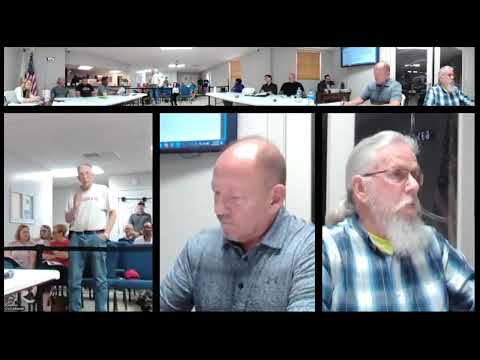
Lebanon — The Lebanon City Council narrowly approved a resolution to eliminate several city positions and implement budgetary personnel reductions on April 13, 2026, after a lengthy public-comment period in which city employees and residents criticized the process as opaque.
The council approved “version 2” of the labor-force reduction resolution in a 4–3 vote after a 3–3 tie was broken by the mayor. Staff described version 2 as an alternative that treats positions as vacated if an employee announces retirement by April 30 and sets those positions as eliminated (and therefore not available for rehire) unless the council later takes action to recreate them.
Why it matters: The change alters how voluntary retirements or announced departures affect the number of layoffs the city must carry out. Under version 2, announced retirements that create a vacancy can reduce the number of forced terminations the resolution would otherwise produce. Supporters argued it gives the city flexibility to reduce payroll without additional firings; critics said it offered a rushed path to eliminate long-standing positions.
Council members and staff walked through the options before the vote, and staff emphasized that the resolution eliminates positions (not named individuals) and that vacancies created by announced retirements could be counted against the eliminations. The vote followed repeated public comments from employees and residents asking whether an IMRF early retirement incentive, resignations, or voluntary retirements would change which positions are cut.
Employee and resident concerns: In public comment, Mike (a lifelong resident and 30-year city employee) said the process lacked transparency: “This whole process with the layoffs and the budget numbers have been about as transparent as a mud bag.” He also provided overtime figures he said came from city records: “In 2024, police had $92,802 in overtime; in 2025, $110,601; and so far this year the police have $175,409,” and urged that reducing overtime could help close the deficit without layoffs.
Other speakers pushed for clearer disclosure of account balances and for a citizen finance committee to review the city’s fiscal choices. Carl, a resident who called for a citizen finance committee, told the council it needed outside expertise to address “the city’s financial woes.”
Staff response and process: City staff and counsel explained procedural differences between the committee-passed version (version 1) and the alternative (version 2), including how temporary/seasonal employees were counted and whether the resolution contained language allowing employees to voluntarily relinquish employment ahead of April 30 and thereby preserve other positions. Staff warned that the April 30 notice window constrained the council’s calendar and that referring the resolution back to committee would delay final action beyond the firm date in late April.
Outcome and near-term steps: The council approved version 2 by roll call (the recorded tally showed an initial 3–3 split and the mayor casting the tie-breaking vote). The resolution, as written and adopted, eliminates the listed positions unless the council later acts to recreate them. Council members also discussed offering affected employees temporary or part-time cemetery work or other short-term assignments, and they referred some cemetery staffing options to committee for further work.
What’s next: The resolution takes effect as adopted; staff will implement the positional eliminations as described and follow any contractual or union processes required. Council also authorized an IMRF cost-study request (see separate votes) to explore a potential early-retirement program, but staff said the study would not itself automatically change the immediate effect of the adopted resolution.
At the meeting’s close, the council moved several related personnel items to committee (cemetery staffing, building-inspection coverage) and prepared to enter executive session to handle personnel and property matters.
(Reporting based on the April 13, 2026 Lebanon City Council meeting transcript.)