Get Full Government Meeting Transcripts, Videos, & Alerts Forever!
Get email alerts on the Comprehensive Plan topic
No spam. Unsubscribe anytime.
Planners say Ann Arbor comprehensive plan aims to simplify zoning, encourage "missing middle" housing
Summary
Planning manager Brett Leonard described a draft comprehensive land use plan adopted by the planning commission and headed to city council on March 16, proposing simplified land-use categories, promotion of missing-middle housing and a base minimum of three-unit developments in residential areas while acknowledging implementation constraints.
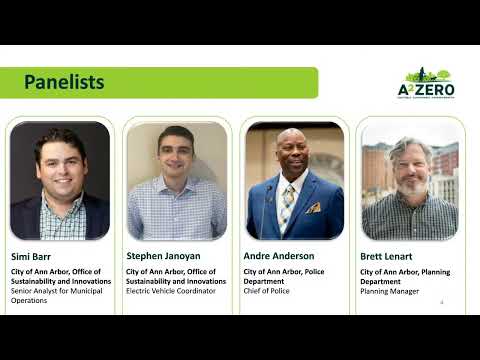
Brett Leonard, Ann Arbor's planning manager, told a public sustainability forum that the city's comprehensive land use plan — adopted by the planning commission and scheduled for a city council review on March 16 — is an aspirational policy document meant to guide future zoning and regulatory changes.
"The comprehensive land use plan is the aspiration," Leonard said, describing a three-year process that sets goals for affordability, sustainability and equity but does not itself change zoning rules. Leonard said the plan proposes simplifying about 34 existing zoning districts into three broad categories (hub, transition and residential) and promotes "missing middle" housing to expand typologies beyond single-family homes. One specific proposal discussed would set a base minimum of three-unit developments as an allowable option across residential areas to increase housing variety.
Leonard said those land-use changes are intended to support transportation and sustainability goals — for example, the plan seeks to reduce vehicle miles traveled and to concentrate growth along transit corridors — but acknowledged legal and regulatory constraints the city faces, including limits set by state rules governing building codes and taxation. When asked about geothermal for new buildings, Leonard said cities cannot unilaterally require specific building systems: "I don't have that hammer," he said, but added the city can offer incentives and city-led projects (such as certain affordable housing developments) can incorporate geothermal where the city is the primary investor.
The presentation included contextual figures used by planners, including a 2021 estimate that roughly 75,000 people commute into the city daily, which Leonard said planners use while acknowledging data and modeling challenges. He said the plan includes commitments to metrics and that public services divisions are working to align infrastructure capacity with future growth scenarios.
Leonard invited questions and offered contact information and additional resources for community members to learn more about the draft plan.