Get Full Government Meeting Transcripts, Videos, & Alerts Forever!
Get email alerts on the Fraud Enforcement topic
No spam. Unsubscribe anytime.
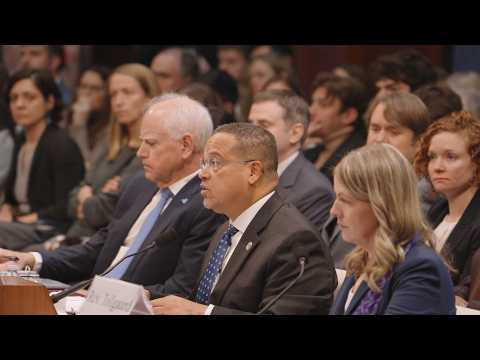
Minnesota Attorney General Keith Ellison urges tougher fraud enforcement, criticizes federal "Operation Metro Surge"
Summary
Attorney General Keith Ellison told a committee his office has secured 300 Medicaid fraud convictions, recovered more than $80 million, and urged lawmakers to pass a medical assistance protection act while sharply criticizing a federal operation he said undermined fraud investigations in Minnesota.
Minnesota Attorney General Keith Ellison told a legislative committee that his office has secured 300 Medicaid fraud convictions and recovered more than $80,000,000 for taxpayers, while urging lawmakers to give his office more tools to prosecute fraud.
"Fraud in government programs is reprehensible. It takes food from the tables of the hungry. It takes shelter from those without it," Ellison said, framing fraud enforcement as a priority for state government and describing his office's recent work returning tens of millions of dollars to victims of consumer fraud.
Ellison said his Medicaid fraud control unit has ranked fifth nationally over the past six years in fraud convictions and noted that, under Minnesota law, the attorney general's office has limited criminal jurisdiction: Medicaid fraud is the only criminal matter the office can prosecute independently, while other criminal matters must be referred by county attorneys. He said the office supports Minnesota's 87 county attorneys and regularly coordinates with federal investigators when cases fall outside state jurisdiction.
Ellison urged the legislature to pass a bipartisan "medical assistance protection act," which he said would provide additional resources to prosecute Medicaid fraudsters. "Last week, I urged the state legislators to pass a bipartisan medical assistance protection act, which would give us additional resources to prosecute Medicaid fraudsters," he told the committee.
He also recounted actions by federal authorities that, he said, undermined fraud enforcement. Ellison criticized a federal initiative that the transcript references both as "Operation Metro Search" and "Operation Metro Surge," and which he described as involving "over 3,000 masked armed agents" deployed in Minnesota. He said two U.S. citizens, Renee Goode and Alex Preddy, were killed by federal agents during the operation and that federal law enforcement has refused to cooperate with state efforts to investigate those deaths.
"Operation Metro Surge did nothing to address fraud in our state. It harmed our economy. It scarred our people, and it dealt a devastating blow to fraud enforcement in Minnesota," Ellison said, adding that he believes the operation led to resignations in the U.S. attorney's office and diverted prosecutorial resources.
He told the committee that six high-ranking attorneys resigned from the U.S. attorney's office and that eight more prosecutors left afterward, describing remaining staff as "drowning in immigration-related petitions" resulting from the operation rather than prosecuting fraud cases.
Ellison framed the problem as one that requires coordination across political lines and levels of government. "We cannot combat fraud without consistent messaging and support from our political leaders," he said, calling for cooperation between Republican and Democratic leaders, and between federal and state authorities.
He closed by saying he stands ready to work with the committee to advance fraud enforcement and looked forward to the committee's questions.
The committee's next steps and any legislative response to Ellison's call for a medical assistance protection act were not specified in the transcript.