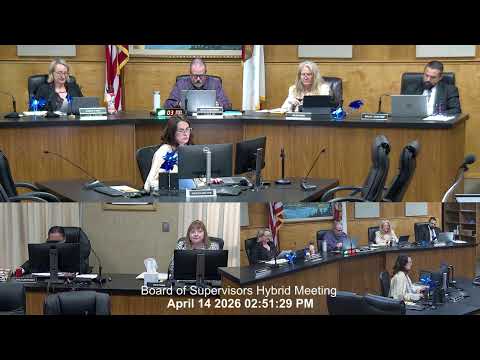
Lake County supervisors hear update on Workday ERP; go-live set for July 1 amid data and training concerns
Loading...
Summary
County Auditor-Controller Genevieve Harrington told the Board of Supervisors that Lake County will go live on Workday July 1 for finance and HR after a January 2025 contract; supervisors and fiscal partners pressed for a deep-dive on data conversion, treasury reports and school integrations before the launch.
Genevieve Harrington, Lake County auditor-controller and county clerk, told the Board of Supervisors that the county will move forward with a July 1 go-live for Workday, the enterprise resource planning (ERP) system the county contracted in January 2025.
Harrington said the county selected Workday after an RFP process led with consultants and that the implementation will use a "big bang" approach, bringing finance and human capital management online together because the legacy system was fragile. "Once we started, it was basically kind of crumbling beneath us," she said, arguing the county needed to address finance and HR at once.
Why it matters: the switch affects payroll, grant accounting, procurement and timekeeping for all county employees and several external partners. Harrington said timekeeping, grant tracking, asset tracking and procurement modules are largely built and that the system enforces approval thresholds and reduces multiple manual data entries that now drive reconciliation work.
Harrington walked supervisors through employee-facing features (clock-in, day-off requests and supervisor approvals) and described an org chart build to align approvals to departmental structure. On historical data, she said one year of data will be loaded into Workday on July 2 and the legacy "NoviLine" system will remain accessible for older records. Phase 2 will add five years of detailed data; bringing all prior years over would be a stakeholder decision and may be phased based on cost and records-retention needs.
On reporting, Harrington said full Comprehensive Annual Financial Report (CAFR) production inside Workday is not a day-one capability and would be a Phase 3 objective that could take multiple years and dedicated staff. She said the county currently pays about $60,000 to outsource CAFR preparation and is evaluating whether internalizing that work would produce savings in the long run.
Workday and support: Steve Rogers, a senior director at Workday, described the county's subscription support (Workday Success Plans) and an "ask-an-expert" weekly support block. "We'll be here for the long term," Rogers said, noting the vendor will remain engaged after go-live to help resolve defects and train staff.
Testing and training: Harrington and Workday staff said the implementation includes two payroll parallel tests — Lake County will not go live on payroll without two successful runs — and a set of workshops and individualized sessions through June to reach departments. For employees in the field, Harrington said the county can supply tablets as a lower-cost alternative to dedicated time clocks.
Supervisors and fiscal partners press for more scrutiny: Supervisors expressed unease about the July 1 timeline and requested a focused deep-dive meeting. Supervisor Sabatier said he was "nervous about July 1" given the many outstanding checks and training needs and asked for a one-time meeting with two board members and staff to review long-term costs and risks.
Treasury and school district concerns: An official identified by the chair as Mr. Sullivan (treasury) reported the treasury team had encountered multiple unresolved issues in recent weeks and said Lake County may need a different build approach similar to Nevada County's. Denise Shannon, assistant superintendent of business services for the Lake County Office of Education, said district staff had not been included in testing and urged prompt collaboration because the schools run multiple July payrolls and rely on smooth integrations.
Next steps: Harrington said the project team will schedule the requested deep-dive, reach out to treasury and school partners for additional testing and training and proceed with the current plan while preserving momentum toward July 1. The board then moved into calendar items and announced closed-session matters.
The meeting did not include a board vote on this item; supervisors instructed staff to set up the follow-up meeting and continue implementation work.