Get Full Government Meeting Transcripts, Videos, & Alerts Forever!
Get email alerts on the PreK Tuition topic
No spam. Unsubscribe anytime.
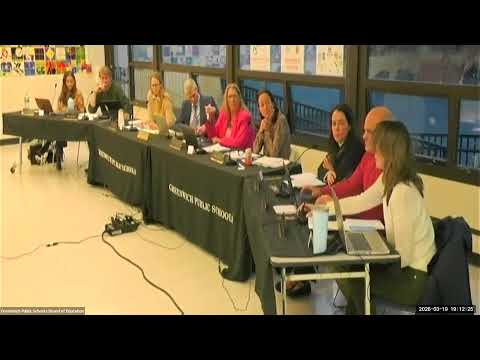
Board hears recommendation to raise Greenwich pre‑K tuition after finance committee review
Summary
The finance committee recommended a 6.2% tuition increase for 2026–27 after reviewing program costs, mandates for free special‑education seats, and last year’s 13% increase. Board members asked for enrollment and demographic impacts before a final vote.
The Greenwich Board of Education on March 19 received a finance committee recommendation to increase tuition rates for the coming year, including a suggested 6.2% change in the set of options reviewed.
"The recommendation at this point is a 6.2 increase for next year, and I feel comfortable with that," Sophie, finance committee chair, told the board while explaining the committee had considered 3.1%, 6.2% and 10% options.
Why it matters: Greenwich’s pre‑K program includes state‑mandated, tuition‑free seats for students identified with special education needs; the district maintains a peer ratio (9 typical peers to 6 students with special needs in many classes). Finance committee members and administrators emphasized the program is heavily subsidized by the district and not a profit center. Karen Krauss (finance committee member) summarized the district’s costing: "We spend about $5,000,000 a year on our pre‑K for about 270 students, which averages out to about $18,000 per student," she said.
Board debate focused on balancing cost recovery with maintaining the program’s lottery diversity and ensuring there are sufficient typical peers to preserve the mandated ratio. Committee members noted that last year’s 13% increase was intended to bring tuition closer to market rates after years of modest 3% adjustments.
Operational details raised in the discussion: town credit‑card fees are currently absorbed by town finance rather than passed to families; town and GPS employees pay reduced shares of tuition (GPS employees pay 15% of full rate, town employees 25%); free and reduced‑price families and students with special needs are not charged full rates.
Next steps: The discussion was a first read. The finance committee recommended the 6.2% increase but the board did not take final action; members asked administrators to return with enrollment details, the distribution of paying families, and whether a multiyear schedule or additional public outreach is warranted before a final vote.
The board emphasized it will watch for any enrollment impacts that could reduce the typical‑peer pool required for the special‑education model; if filling typical seats becomes difficult, trustees said they would reconsider the rate path.