Get AI Briefings, Transcripts & Alerts on Local & National Government Meetings — Forever.
Commissioners press staff on traffic studies, road funding and who decides which county roads are paved
Loading...
Summary
Multiple commissioners raised concerns about rural road conditions and whether traffic studies capture cumulative development impacts; staff explained county thresholds (75 peak-hour trips), DOT review on state roads, the role of the Lowcountry MPO/LATS and the Jasper County Transportation Committee in funding decisions.
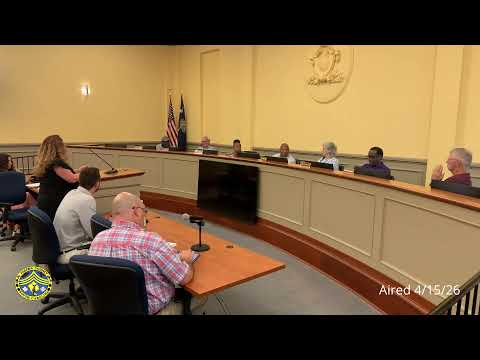
Commissioners used the planning commission's open discussion to press staff for clearer authority and tools to address deteriorating rural roads and the cumulative traffic effects of new subdivisions.
One commissioner said the county is approving subdivisions while rural roads remain in poor condition and asked, "what power do we have to try to get, you know, get our roads our locally road paved?" The staff member responded that county land-development regulations require a traffic study when a development creates 75 peak-hour trips per day, and that projects not meeting that threshold must still submit a traffic analysis during permitting.
Staff explained that South Carolina Department of Transportation reviews traffic studies for state-road mitigation, and that the Lowcountry Area Transportation Study (LATS) — the region's MPO — and the Jasper County Transportation Committee help prioritize projects and distribute CTC funds. "It is the transportation committee that decides which roads are gonna be funded with the CTC funds that they receive," a staff member said.
Several commissioners said traffic studies are often not comprehensive because pending projects are excluded and developer-sponsored studies may undercount cumulative traffic. Staff said the county uses a third-party engineering firm to review developer studies and may place additional mitigation requirements into development agreements — for example, restricting truck routes or requiring physical measures to prevent certain turns.
Commissioners requested copies of the referendum list of roads previously identified for funding and asked staff to email those materials before the next meeting. Staff also urged commissioners to focus on study summaries and recommendations sections when reviewing lengthy traffic reports.
The discussion included examples of mitigation used in large development agreements and repeated a request for better transparency around which projects are included in regional planning studies and the transportation committee's funding decisions. No formal action was taken on funding or road-paving policy at the meeting.