Senate committee advances bill that removes some school vaccination requirements after heated debate
Loading...
Summary
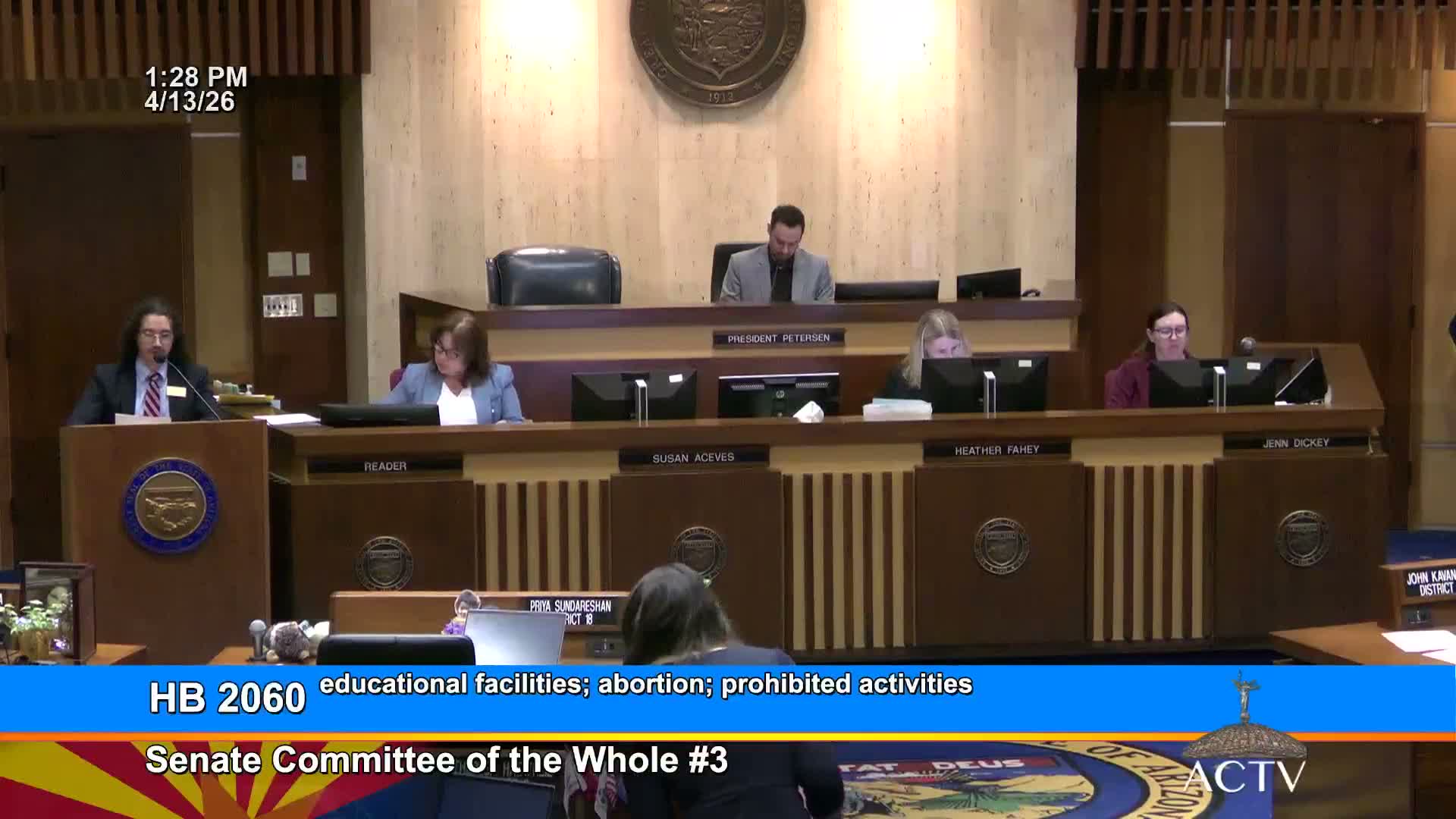
The Senate’s committee of the whole reported House Bill 2,086 (a measure that changes school vaccination requirements) do pass as amended after extended floor debate. Opponents warned the measure would heighten public‑health risks amid local measles outbreaks; proponents secured a committee recommendation to advance the bill.
The Arizona Senate’s committee of the whole voted to report House Bill 2,086 as amended, advancing a measure that opponents say would remove or limit existing school vaccination requirements.
Opponents delivered extended floor remarks before the committee vote. "House Bill 2,086 represents an intense public health risk," said Senator Gonzalez, reading remarks from stakeholders that warned removal of documentation or exemption forms would leave children and employees with disabilities exposed during ongoing measles outbreaks. "Removing these vaccination requirements leaves students and employees who have disabilities especially at risk," she said.
Senator QB also urged colleagues to vote no, citing confirmed measles cases in Maricopa County and other counties and warning that the bill "is a dangerous bill" that would set back public‑health protections. Both senators pointed to recent hospitalizations and stakeholder submissions opposing the change.
Supporters moved and adopted a Health and Human Services Committee amendment in the committee of the whole and the chair called the question. The committee voted that when it rises it will recommend HB 2,086 as amended do pass. The transcript records the committee action and that the ayes prevailed; the measure was reported to the Senate for further action.
Why it matters: Proponents argue the bill reduces administrative burdens and clarifies waiver or documentation rules; opponents say it removes vital safeguards during active outbreaks and could limit public‑health authorities’ ability to respond. Several senators asked for additional clarity on how the proposed changes would operate during outbreaks and on exceptions already present under existing law.
Next steps: The committee reported the bill with a do‑pass recommendation; the full Senate recorded committee and third‑reading actions in the transcript and instructed the secretary to transmit passed House bills to the House as required. The transcript does not provide full floor vote tallies for the committee recommendation beyond the committee announcement that the ayes prevailed; final floor scheduling and any subsequent Senate floor votes on a final passage (post-committee) were recorded elsewhere on the calendar.