Get Full Government Meeting Transcripts, Videos, & Alerts Forever!
Get email alerts on the Building Code topic
No spam. Unsubscribe anytime.
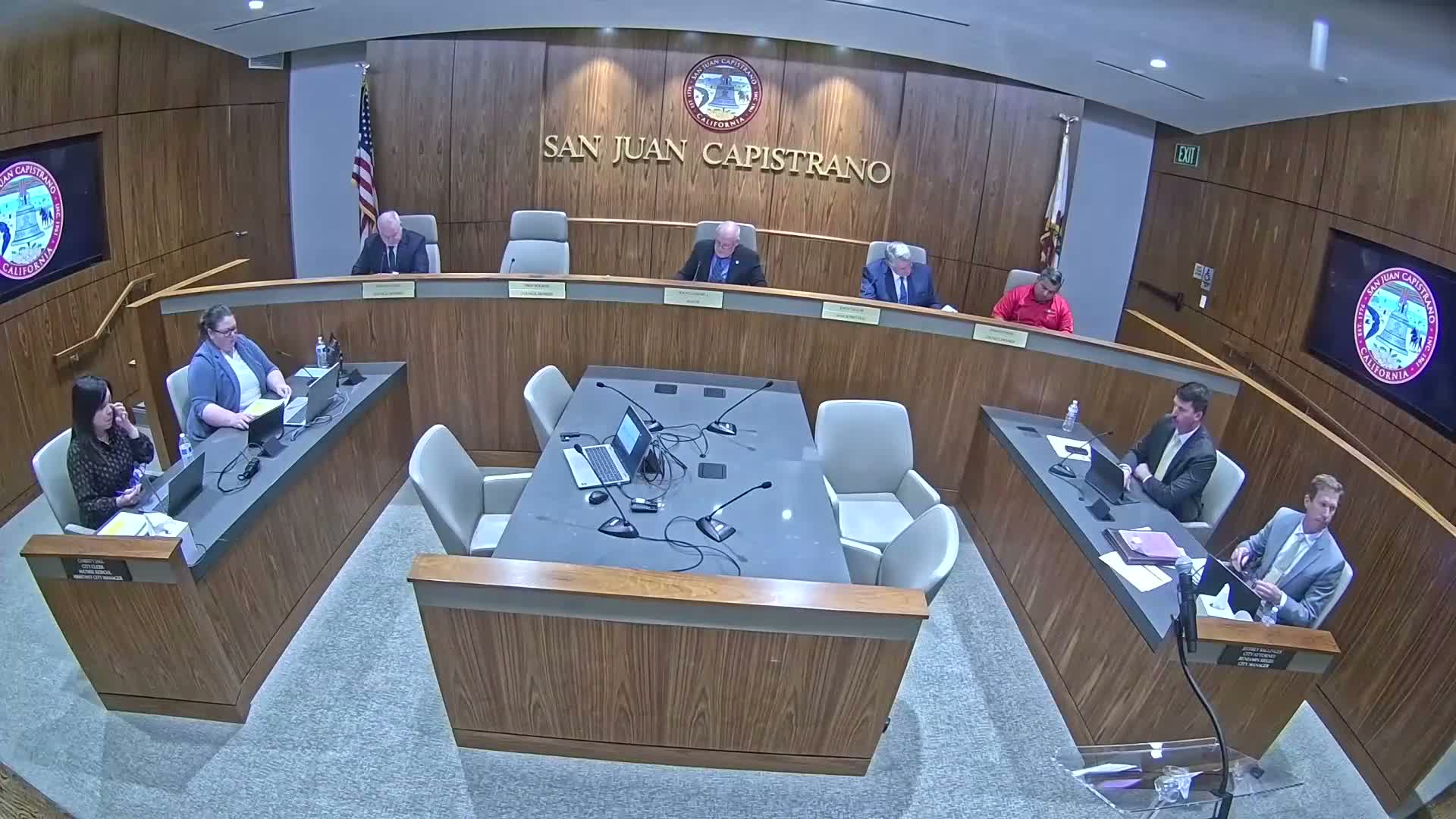
San Juan Capistrano council moves to introduce 2025 state building code with local amendments
Summary
The council unanimously introduced an ordinance to adopt the 2025 California Building Standards Code (Title 24) with local amendments addressing wildland‑urban interface rules, vegetation management and an appeal process; a public hearing was set for Feb. 17, 2026.
San Juan Capistrano — The City Council voted unanimously on Feb. 3 to introduce an ordinance adopting the 2025 California Building Standards Code, moving the city toward formal adoption after staff incorporated several local amendments and set a public hearing for Feb. 17, 2026.
Development services director Joel Rojas told the council the state updates the code every three years and that the 2025 edition "was required to be adopted and in effect by 01/01/2026." He said the item is being processed through the normal (non‑urgency) ordinance adoption steps because the council already adopted an urgency ordinance in December to keep the 2025 code in effect.
Why it matters: The 2025 code includes a new California Wildland‑Urban Interface code tied to recently adopted hazard severity maps. Staff recommended a package of local amendments intended to clarify review rules, reduce subjective triggers for retrofit requirements, and add an internal appeals path. Rojas highlighted noteworthy changes: adoption of Orange County Fire Authority vegetation‑management guidance (guideline C‑05), consolidated structure‑hardening requirements for high‑severity areas, exemptions for small structures (tents, antennas), clarified expiration periods for plan check applications, and an appeal process that would allow the city manager to appoint a technical reviewer rather than requiring the council to hear detailed building‑code appeals.
Council members pressed staff for specifics. Council member Farris asked how homeowners determine whether a property falls within the new wildland‑urban interface zones; Rojas said an interactive map on the city website allows residents to enter an address to check hazard severity. Council member Taylor asked whether objective triggers remain for requiring sprinklers in existing non‑sprinklered homes; staff said the code retains objective thresholds (for example, changes that add more than 50% of square footage within two years and exceed 5,000 square feet of total living area) but removes a subjective trigger.
The council voted to introduce the ordinance and to set a public hearing for 02/17/2026. The motion to introduce was moved by a council member and seconded; the vote was unanimous (all present members voting in favor). The ordinance text includes adoption by reference of the 2025 California Building Code and related titles (Fire, Electrical, Mechanical, Plumbing, Energy, Wildland‑Urban Interface and Green Building Standards) and local additions, insertions and deletions consistent with the staff report.
Next steps: The council will hold a public hearing Feb. 17 and then consider final adoption. Staff characterized the local amendments as intended to streamline review and clarify requirements for applicants.