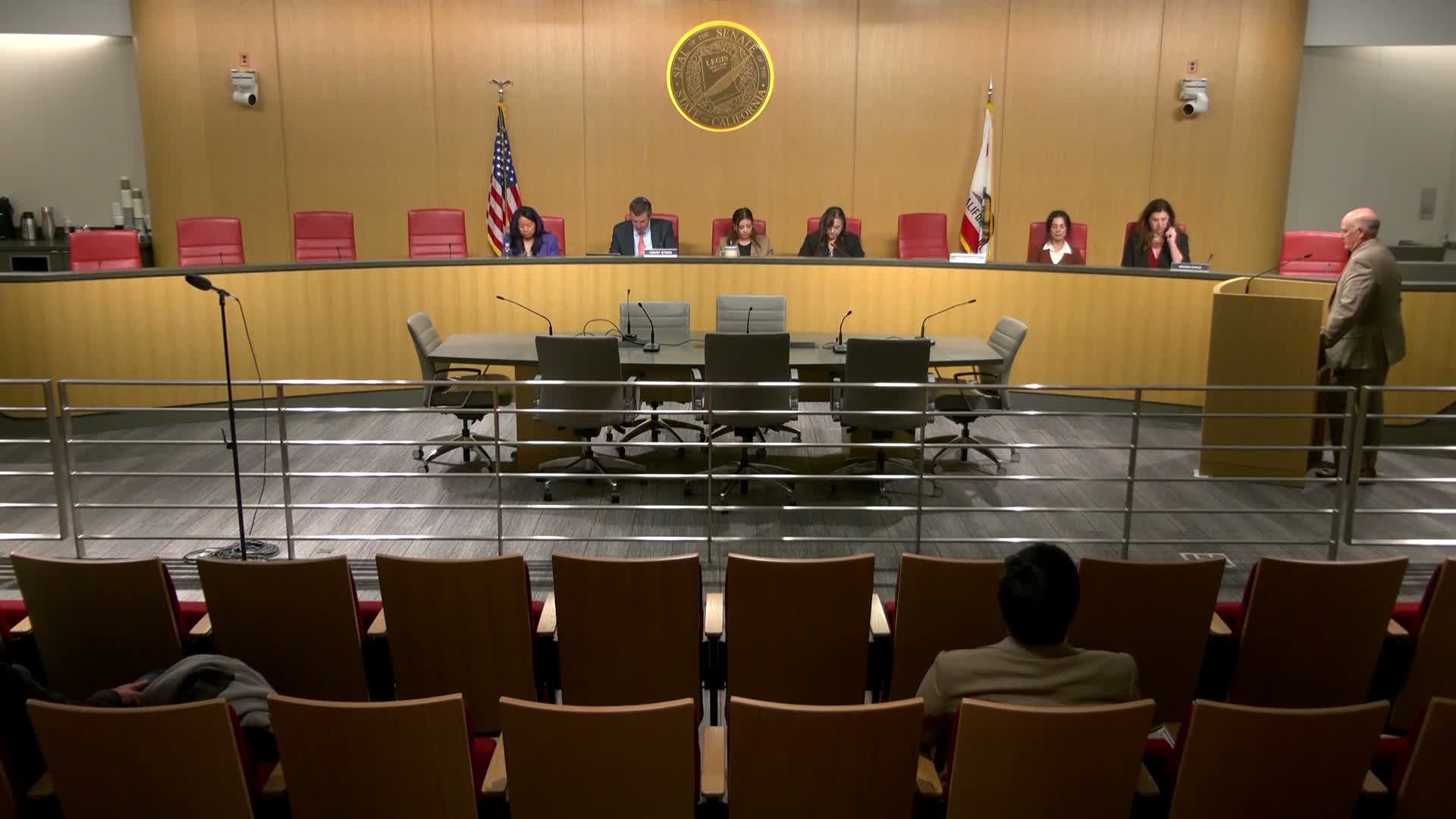
Senate committee advances SB 904 to speed and coordinate wildfire rebuilding
Loading...
Summary
The Senate Emergency Management Committee advanced SB 904 to Appropriations. The bill would codify parts of Executive Order N‑425 to identify permitting and building-code barriers after wildfire disasters; Climate Action California opposed the measure, citing concerns about streamlining protections.
The Senate Emergency Management Committee voted to advance SB 904, a bill that would codify elements of Executive Order N‑425 to coordinate agency responses and identify permitting and building-code requirements that can impede rebuilding after declared wildfire emergencies.
The vice chair, who presented the bill, told the committee SB 904 “builds upon the broad and coordinated agency response effort demonstrated in the LA County Palisades fires” and would make similar coordination standard practice for future wildfire disasters. He asked members for an I vote when the committee took action.
Why it matters: SB 904 aims to streamline post‑disaster recovery by clarifying which permitting and building-code processes are common across wildfire events and which must remain intact. Proponents say the changes would help affected communities rebuild faster without eliminating existing protections.
Opposition and concerns: Megan Shumway of Climate Action California testified in opposition. Shumway told the committee the organization opposed the bill but did not elaborate on specific amendments during the hearing. The chair acknowledged concerns about possible overreach, saying the committee would “keep an eye” on the measure, particularly the impact of any streamlining on water‑supply planning and other safeguards.
Sponsor response: The bill’s presenter said the measure does not “skip processes” and asserted it retains protections while identifying processes that can safely be expedited so communities can return to rebuilding sooner.
Procedure and next steps: The committee made a motion to pass SB 904 to the Senate Appropriations Committee; the measure was left on call for absent members and, in the final tally reported at adjournment, advanced out of the committee by a 9–0 vote. It will now be considered by the appropriations committee.
The committee adjourned after completing its roll calls for the day.